
Forests have been shape-shifters since they first appeared on Earth around 385 – 390 million years ago during the Devonian period. Since then, they have expanded, contracted, and adapted to whatever the planet has thrown at them, molding themselves to its rhythms. Now, however, they are struggling mightily with what humans have and continue to throw at them: anthropogenic climate change. It isn’t just another chapter in their long ecological story. Natural climate shifts happen extremely slowly, over thousands of years. Not so with anthropogenic climate change, which has occurred over just a few hundred years and is accelerating faster than even climate scientists predicted. It’s a plot twist so abrupt and sweeping that forests across the globe are being forced into roles they never evolved to play, with little time to adapt.
We’re watching the transformation in real time, in the news almost daily: hotter temperatures, chronic drought, megafires, collapsing carbon sinks, and species reshuffling at a pace that outstrips evolutionary adaptation. Forests are under pressure from every direction.
Heat: The Silent Stressor That Never Lets Up
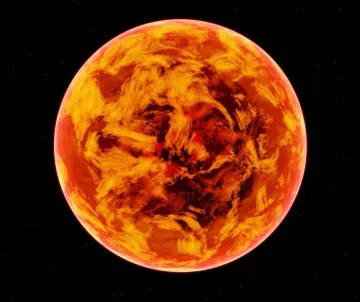
Forests thrive within narrow thermal comfort zones. Push them past those limits and their physiology starts to unravel.
Trees initially respond to warming with a burst of productivity. Photosynthesis increases, and growth accelerates. However, the honeymoon ends quickly. Once temperatures exceed species‑specific thresholds, photosynthesis falters, respiration spikes, and trees begin burning more energy than they produce.
Soil, too, suffers from increased heat. Microbial activity accelerates decomposition, releasing centuries-old soil carbon. Under experimental conditions, soil respiration can increase by nearly 17% when the warmth becomes overwhelming. That’s not just a number; it’s a stark warning that the forest floor itself can become a source of carbon emissions.
Drought: When Water Becomes the Limiting Factor Everywhere
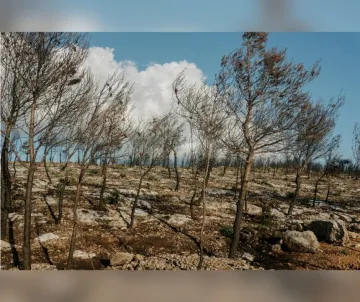
Drought compounds this challenge, shifting how forests operate. Even in regions where rainfall patterns remain stable, rising temperatures increase evaporation, drawing moisture from trees at an alarming rate. The consequences are severe, and drought-induced mortality rates are climbing, particularly in places like western Canada, where some aspen stands have seen up to 80% die-off during recent droughts. As water resources dwindle, trees lose their natural defenses and become vulnerable to pests such as bark beetles, which thrive in weakened environments. It’s a dramatic shift in ecological identity; forests that once struggled against the cold are now threatened by drought.
Disturbances: Fire, Beetles, and Windstorms in Overdrive
Climate change also supercharges disturbances, often in combination, unleashing a vicious cycle of destruction. Wildfires are burning with unprecedented intensity and frequency, while warmer winters allow bark beetles to expand their range. Meanwhile, extreme wind events destabilize trees, creating conditions ripe for pest outbreaks. In some regions, these combined disturbances have increased by more than threefold, and each cycle feeds into the next. Drought weakens trees, beetles invade, dead trees become kindling, and the wind-driven fires rage on.
Amid this chaos, forests are rapidly changing. Boreal conifers are suffering and being replaced by temperate broadleaf species as these species migrate northward. In mountainous regions, a temperature rise of just 3.6°F can precipitate a radical shift from towering conifers to smaller, drought-resistant hardwoods. Interestingly, these shifts often lock ecosystems into a new equilibrium. Even if temperatures cool again, forests may not revert to their former selves. Crossing that tipping point often means saying goodbye to the old forest permanently.
The climate's impact on forests is more than an ecological crisis; it's a profound shift in how forests function as climate allies. As temperatures warm, soil carbon declines as decomposition accelerates, while thawing permafrost releases CO₂ and methane into the atmosphere. Disturbance-driven mortality transforms forests from carbon sinks into carbon sources, exacerbating the very problem climate change creates. During the past three decades, forest biomass carbon has declined by approximately 6 gigatons. To give scale to this number, a blast of 6-gigatons of TNT would cause a global catastrophe that would reshape climate, geography, and human civilization, and the equivalent of a medium-sized asteroid hitting the Earth. Needless to say, it is a troubling statistic in a world already grappling with climate challenges. In climate‑policy terms, a 6‑gigaton decline is a red flag: it shows that relying on forests alone is no longer viable, and that aggressive fossil‑fuel reductions plus strengthened forest protection are essential.
Some forests are now perilously close to crossing thresholds beyond which recovery may become impossible. Mountain, alpine, and water-limited ecosystems are particularly at risk. Once these critical systems reach their climatic tipping points, they could shift into entirely different ecosystems, such as shrublands or grasslands, with few of their original species and far less carbon storage capacity. The potential for abrupt transitions looms.
Ultimately, climate change is no longer merely stressing forests; it's completely restructuring them. The intertwined effects of heat, drought, disturbance, species turnover, and carbon loss are converging to create forests that may look and behave drastically differently from those we have known throughout human history. The pressing question now isn’t whether these forests will change; it’s how much they will change, how quickly, and whether we can preserve enough resilience to keep these vital ecosystems functioning for generations. Forests that were once limited by cold are now limited by water, creating a fundamental shift in ecological identity.
Species Shuffle: Forests Are Reshaping Themselves
Climate change is rapidly reshaping forest composition.
Boreal conifers are declining as warming accelerates. Temperate broadleaf species are colonizing. In mountain forests, warming of more than 3.6°F can trigger abrupt loss of tall conifers and replacement by smaller, drought-tolerant hardwoods.
And here’s the kicker: these shifts often show hysteresis. Even if temperatures cool again, forests don’t necessarily return to their previous state. Once the tipping point is crossed, the old forest is gone.
Carbon Loss: When Forests Stop Being Climate Allies
Forests have long been our most reliable carbon sinks, but climate change is eroding that role.
- Soil carbon is declining as warming accelerates decomposition.
- Permafrost thaw is releasing CO₂ and methane.
- Disturbance‑driven mortality is flipping forests from sinks to sources.
This isn’t just an ecological problem; it’s a climate feedback loop. As forests lose carbon, the planet warms faster, which further destabilizes forests.
Tipping Points: The Moment When Change Becomes Irreversible
Climate change is not just stressing forests; it’s restructuring them. The combination of heat, drought, disturbance, species turnover, and carbon loss is creating forests that look, function, and behave differently than those in human history.
Some forest ecosystems are approaching thresholds beyond which recovery becomes impossible. Once they cross their climatic tipping points, they shift to different dominant species and different ecosystems, such as shrublands or grasslands, which store far less carbon. We’re not talking about slow ecological drift. We’re talking about abrupt transitions.
What Can Be Done: Protecting Forests in a Rapidly Changing Climate
Forests may be struggling, but humans can help. The way forward is clear: we must cut fossil fuel emissions, protect existing healthy, biodiverse forests, restore degraded ones, and empower the communities and knowledge systems that have cared for these forests for millennia. We just have to act quickly enough to give them a fighting chance.
The Loma Prieta Chapter is one of the region’s strongest advocates for forest preservation, actively fighting against destructive practices like clearcutting and post‑fire logging, calling for the protection of old‑growth and mature trees, and pushing for climate‑smart land‑use policies. The Chapter also promotes policies that reduce wildfire risk while safeguarding the ecological integrity of forest ecosystems.
Resources:
The Future of Forests, by Richard Heinberg | Resilience.org, 2026
Climate Change: Impacts on Forest Cover, by Partha Chandra Mondal, Arkadeb Mukhopadhyay, Madhu Tippannanavar, Shreosi Biswas & Shweta Meshram | Springer Nature Link, 2025
The impact of climate change on forest systems in the northern United States: projections and implications for forest management by Emeritus Prof. W. Keith Moser, Dr Patricia Butler-Leopold, Dr Constance Hausman, Dr Louis Iverson, Dr Todd Ontl, Dr Leslie Brandt, Dr Stephen Matthews, Dr Matthew Peters, Dr Anantha Prasad | Burleigh Dodds, Science Publishing, 2019