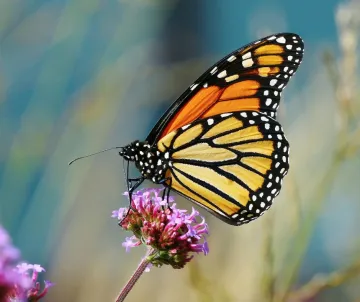
"Chasing Monarchs," was a live presentation by National Geographic Explorer and photographer Jaime Rojo, held at the Hammer Theater in San Jose earlier this month. The talk and photos addressed the migration and routes of the monarch butterflies, the threats to their survival, and the challenging work he has done over the past 20 years to document their world. The presentation described how monarch butterfly populations have decreased, with eastern monarchs reduced by 80% and western monarchs reduced by more than 95%, and what can be done to rescue them from the brink of extinction. His book, Monarchs, with 140 photographs, was just published on the day of his talk!
To help pollinators, The Xerces Society for Invertebrate Conservation recommends following these four steps to support pollinators in any location, whether you tend an urban patio or a suburban yard, work in a city park or on a farm.
Grow Pollinator-Friendly Flowers. Growing the right flowers, shrubs, and trees with overlapping bloom times will provide pollinators with pollen and nectar from spring through fall. You can find information on the specific plants that support Monarch butterflies on the plants for pollinators page at the Xerces Society for invertebrate conservation.
Provide Nest Sites. It is important to support all pollinator life stages, including eggs and larvae! For bees, leave patches of bare ground and brush piles, have plants and shrubs with hollow or pithy stems, or install nesting blocks. For butterflies and moths, plant their caterpillar host plants.
Avoid Pesticides. Pesticides, especially insecticides, are harmful to pollinators. There are safer ways to manage issues!
Spread the Word. You can share information about pollinators on social media, talk with your neighbors, or spread the word with a pollinator habitat sign or pesticide-free sign.
Together, we can transform our neighborhoods and create healthier landscapes that will benefit us as well as pollinators. Find everything you need to get started at BringBackThePollinators.org.