July 10, 2026
Planning Commission
City of East Palo Alto
By email: planningcommission@cityofepa.org
cc: East Palo Alto City Councilmembers
Re: Planning Commission July 13 Meeting: Extension of Special Use Permit (SUP 26-001) for Infinity Salvage Automobile Recycling Facility
The Sierra Club Loma Prieta Chapter’s Bay Alive Campaign, Citizens Committee to Complete the Refuge, Green Foothills, Nuestra Casa, SPUR, and the San Mateo County Bird Alliance are taking this opportunity to comment on the SUP 26-001 Extension. We were informed of a June 22, 2026 East Palo Alto (EPA) Planning Commission item to extend for one year the Special Use Permit for Infinity Salvage. This item was rescheduled for July 13. The Staff Report for the item has not been posted as this is written, nor has Exhibit A which contains the conditions for approval of the extension. Our letter therefore summarizes our concerns about the future of this property from our past reviews of the Ravenswood Business District Specific Plan Update (RBDSP) and Environmental Impact Report (EIR), and newer information from public sources. Additional topics may be raised in the July 13th meeting. Our present concerns relate to the following issues:
Contamination of soil and groundwater by auto salvage activities, which without remediation will continue to pose a risk to future users of the property and to the adjacent wetlands,
Contamination of the Bay Trail, channels and marshes by products of incomplete combustion from a July 14, 2024 fire at the facility,
Lack of regulatory oversight, cleanup plan, or financial assurance to support site cleanup,
RBDSP land use changes in effect upon site closure and potential site contaminant impact upon those uses, and
Recommended conditions for permit renewal.
As summarized in the staff report for the December 2024 renewal of Infinity Salvage’s use permit1, an auto salvage facility has operated at this location since 1948. The current owner purchased the business in 1974. Over the ensuing years, city and county officials identified numerous violations relating to waste storage, stormwater discharge, safety, fire prevention, access to emergency vehicles and other codes, but recent inspections determined that those violations were remedied. A fire in July 2024 consumed 50 vehicles and auto parts storage racks, producing a dense smoke plume that extended to the east and southeast across the Bay Trail and the Bay marshes. The 2024 renewal specified that the business could not accept new inventory until the site was returned to its pre-fire condition. Inspection reports post-fire are not available online. Figure 1 shows three aerial images of the site from April 2024, September 2024, and a more recent but undated image. It appears that the business has reduced their inventory further following the 2024 permit renewal.
Historical contamination may pose a risk to public health and the environment.
Auto salvage yard activities produce pollutants that include oil and grease, petroleum hydrocarbons, ethylene glycol, arsenic, chlorinated solvents, heavy metals, mercury, PCBs, and sulfuric acid.2 More than 70 years of this land use has likely contaminated soil and groundwater with toxic chemicals and may have contaminated adjacent Bay wetlands. Despite this, there is no indication in the public record that Infinity Salvage or any regulatory agency has tested soil, groundwater, stormwater, or other environmental media on the property3. The only nearby groundwater monitoring well, immediately north of the property on the ROMIC (Bay Road Holdings) hazardous waste site, has consistently tested free of chlorinated solvents. A general stormwater discharge permit for the salvage facility expired in 2020; if the stormwater is now routed to a municipal wastewater treatment plant, there is no information available on the composition and volume of that wastewater, or where it was previously discharged.
The RBDSP designated the Infinity Salvage parcels as open space, envisioning city parkland. Although turf and other soil cover will reduce exposures to nonvolatile contaminants, park users could be exposed to volatile contaminants in soil gas. In addition, the property is subject to flooding and will increasingly be impacted by emergent groundwater due to sea level rise, even after completion of the SAFER levees. Contaminants remaining in the soil and groundwater may seep into the adjoining wetlands or be carried by rainfall runoff, which would be harmful to birds and wildlife. Any plans for the future use of this property must be informed by a comprehensive study of the extent and nature of the site contamination.
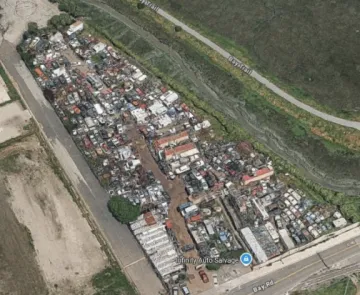
Figure 1a: Current Google Maps image dated 2026, actually pre-fire (4/2024) per Google Earth History
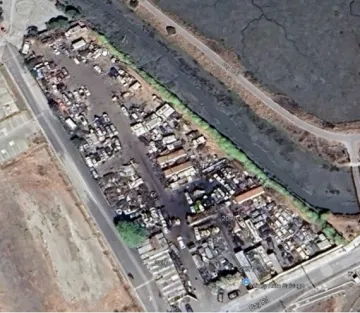
Figure 1b: Most recent Google Earth image (9/2025), showing fire scar and inventory reduction
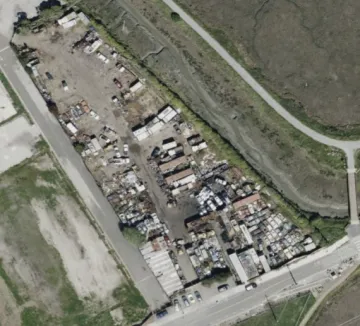
Figure 1c: Apple Maps image (not dated), showing further inventory reduction
Toxic chemicals from the 2024 fire smoke plume may have settled on the Bay Trail, Ravenswood Open Space Preserve and Faber-Laumeister Tract.
As shown in Figure 2, the 2024 fire produced a dense plume of black smoke flowing to the east and southeast passing across sensitive, protected Bay wetlands. Smoke from auto salvage yard fires contains numerous toxic chemicals, including asbestos, aldehydes, acid gases, sulfur dioxide, nitrogen oxides, polycyclic aromatic hydrocarbons, benzene, toluene, styrene, metals and dioxins4. While some gaseous pollutants disperse rapidly, other chemicals will tend to attach to particulates and settle onto soils and vegetation. In reviewing accounts of the response to the 2024 fire, none of the agencies responding (Menlo Park Fire Department, San Mateo County Environmental Health) indicated that they collected air samples from the plume or conducted follow-up vegetation or sediment sampling after the incident.
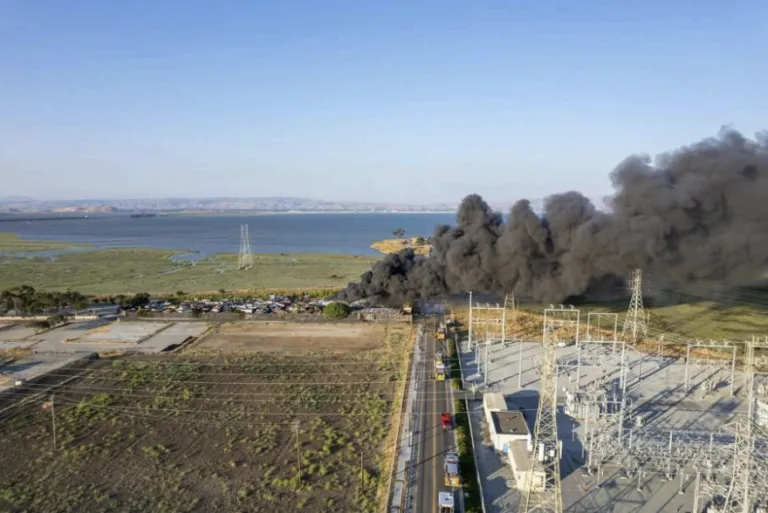
Impacts of smoke contaminants on the wetland ecosystem should be evaluated and remediated, if necessary. Additionally, as the SAFER levee is currently planned to border the Infinity Salvage property on the Bay side, soil disturbance during levee construction is likely to require special precautions to avoid spreading toxic chemicals into the wetlands.
Lack of regulatory oversight and management plans raise concerns about future management of site cleanup
At present, the Infinity Salvage operation is under the regulatory oversight of the San Mateo County Department of Environmental Health, in their role as Certified Unified Program Agency (CUPA) for hazardous waste collection and disposition. However, typically site investigation and remediation will be led by the California Department of Toxic Substances Control or the Regional Water Quality Control Board. At what point in the site closure will a lead agency be identified?
The property is in the Ravenswood Industrial Area (RIA), which was under cleanup orders 92-037 and 92-086 from the California Regional Water Quality Control Board (RWQCB). However, in Order No. R2-2024-0003, the RWQCB cancelled the previous orders, stating that all properties had complied with their requirements. That conclusion clearly does not apply to Infinity Salvage, which does not appear to have conducted any site investigation or remediation. The property is not included in the Risk Management Plan for the RIA; thus, the cleanup requirements and procedures for the rest of the RIA properties do not apply.
Site investigation and remediation of the property will require significant financial resources. To the extent that Infinity Salvage is responsible for these activities, the Special Use Permit should clarify how site closure will impact those responsibilities.
Depending on the findings of site investigations and a remediation feasibility study, it may be necessary to restrict future uses of the site. In that case, we recommend a land use covenant, as implemented for other parcels in the RBD, as it is more permanent than a deed restriction.
Post-closure land use will be subject to zoning and policies of the Ravenswood Business District Specific Plan.
The RBDSP vision proposes a public park on the current site of Infinity Salvage at Bay Road and extending northward along adjoining Bay wetlands. The policies of the RBDSP also establish a shoreline setback for onshore levee placement, avoiding impacts in sensitive Bay wetlands and related costly mitigation.
Closure of Infinity Salvage provides opportunities to fulfill both of those RBDSP opportunities, should the City and the SAFER Bay Project pursue them. But for both actions, comprehensive contaminant studies of the underlying land with any resulting, required clean-up and monitoring plans would need to be complete and available.
In comments that follow, we recommend Draft and Final Closure Plans be included as terms of the Special Use Permit, plans that characterize contamination status and provide appropriate remediation requirements. Through these plans, land use as described in the RBDSP can be fulfilled.
Recommended conditions for permit renewal
As stated above, we did not have access to Exhibit A of the proposed permit; thus, we cannot provide detailed input on the conditions for approval. However, we recommend including the following conditions:
Termination of Operations: define milestones for progress in winding down operations over the 12-month period. List specific tasks that must be completed by a certain date (e.g., removal of all vehicles, demolition of structures) and consequences if those tasks are not done within the allotted timeframe.
Toxic Substance and Hazardous Materials Clean-Up: require the property owner to prepare publicly reviewable Draft and Final Closure Plans and Corrective Action Plans (if needed). The requirements for the Closure and Corrective Action plans should be equivalent to those required for other properties within the RBD Specific Plan boundaries, i.e., a Phase I site investigation followed by a Phase II soil, groundwater, and soil vapor sampling and analysis program. The Phase II program should also include sampling and analysis of surface soils and sediments in the wetland areas beneath the smoke plume from the 2024 fire and the entire slough bank adjoining the Infinity Salvage property.
It is unlikely that these activities can be completed within the proposed 12-month period, so the terms of the Special Use Permit should accommodate site activities after closure of the business.
We realize comments here may duplicate inclusions in the Exhibit A of proposed SUP 26-001. However, we hope our comments help to improve the permit and the environmental health of East Palo Alto.
Respectfully,
Jennifer Chang Hetterly
Bay Alive Campaign Coordinator
Sierra Club Loma Prieta Chapter
Eileen McLaughlin
Citizens Committee to Complete the Refuge
Chris MacIntosh
Conservation Chair
San Mateo County Bird Alliance
Alexandra Mendoza
Environmental Associate
Green Foothills
Sarah Atkinson
Sustainability & Resilience Policy Director
SPUR
Osvaldo Macias
Environmental Justice Program Coordinator
Nuestra Casa
1 East Palo Alto Planning Commission Staff Report, December 9, 2024, pages 12-33
2 USEPA. Industrial Stormwater Fact Sheet Series, Sector M: Automobile Salvage Yards. EPA-833-F-06-028. December 2006
3 Search of California’s ENVIROSTOR, GAMA Groundwater, and Geotracker databases and the EPA ECHO database.
4 Multnomah County, What to know about smoke and your health. 2018. https://multco.us/news/what-know-about-smoke-and-your-health