By Chris Bannan, Member, Southeastern Pennsylvania Group; Communications Chair
Shut those outdoor lights off!
Spring bird migration has begun!
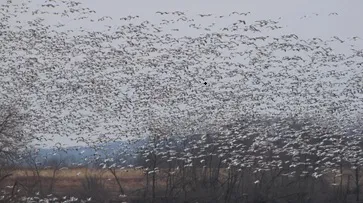
From March through mid-June, billions of birds travel from their southern wintering grounds to northern breeding habitats — with peak migration happening from mid-April to mid-May. Spring bird migration is triggered by changing day length, temperature shifts, food availability, and genetic instinct.
We live in the Atlantic Flyway. The Flyway supports more than 500 bird species. It is a major route for migrating birds in North America, one of four in North America. It’s used by millions of birds each year. These include migratory songbirds, waterfowl, raptors and shorebirds.
Why shut off my lights?
The night sky is an amazing part of our environment shared by both people and wildlife. The cycle of day and night is essential for the natural rhythms of all living things, especially for the billions of birds that rely on it to make their nighttime migrations.
Migrating songbirds, including warblers, vireos, and thrushes, tend to migrate at night. You can find migratory songbirds in urban, suburban and rural locations, resting in trees and shrubs while they migrate.
You may not see these birds migrating since many fly at night, but they are all around us. The John Heinz National Wildlife Refuge in Delaware and Philadelphia Counties, Pymatuning State Park in Mercer County, Peace Valley Nature Center in Buck County, Loyalsock State Forest in Sullivan County and Middle Creek Wildlife Management Area in Berks County are among the many migratory bird stopovers in Pennsylvania.
Lighting can attract night-migrating birds from as far as 3 miles away. Once drawn to a light source, birds often circle the area, wasting critical energy needed for migration and increasing their risk of collisions with buildings and other structures. This is most common on nights with low-cloud ceilings or foggy weather. The light reflecting off clouds may greatly disorient birds. The birds may avoid reliable habitat due to the confusion caused by lights.
Why is this important?

Many of the 1,106 species of birds protected under the Migratory Bird Treaty Act are experiencing population declines due to increased threats across the landscape. Of those 1,106 species, 89 are listed as either threatened or endangered under the U.S. Endangered Species Act. An additional 269 species are listed as Birds of Conservation Concern, in one or more geographic scales (e.g., local, regional, or national).
The Atlantic Flyway is in the most densely populated part of the United States. This area is where migrating birds are exposed to the greatest amount of man made light.
What you can do
- Shut off any unneeded lights, indoors and outdoors, overnight.
- Consider using a timer. If the light is needed for safety, use a timer so it is lit only when needed. For example, a front door light is most useful from sunset until 10 pm. Using a timer would ensure your light is on when you need it. It will also save you money for the time it is off.
- Consider using motion sensitive lighting. If the light is for security, use motion sensor lights. Sudden illumination deters criminal behavior. The light can also save up to 90% on the electricity for that fixture.
- Use window shades to minimize light “spills” to the outdoors
- Use light shields on outdoor fixtures, directing light to the ground, keeping light from shining up into the sky.
- Use only LED amber light bulbs in outdoor light fixtures. Avoid blue white and bright white lighting. “Warmer" LEDs are less likely to disorient birds.
Additional Reading
Springing forward: Migrating songbirds catch up with the start of spring in North America
Cornell Lab of Ornithology: Seven Simple Actions to Help Birds
Raptor Migration Through Pennsylvania
Migrating Songbirds Are All Around You. Here’s How to Spot Them
This blog was included as part of the April 2026 Sylvanian newsletter. Please click here to check out more articles from this edition!