By Nancy Muma, Wakarusa Group Chair
Dr. Muma is professor emerita of the University of Kansas Department of Pharmacology and Toxicology
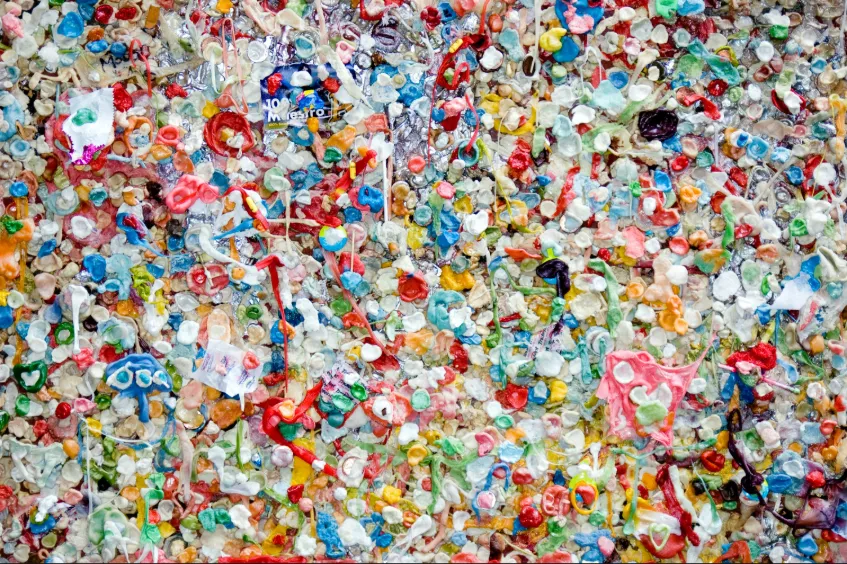
Microplastics | Marc Newberry on Unsplash
Did you know that the amount of plastic in our brains is about the same as that of a sturdy plastic fork? Although plastics are durable, they eventually break down into smaller and smaller particles known as micro- and nanoplastics. Micro- and nanoplastics are in our bodies: in our blood, lungs, intestines, liver, kidneys, placentas and even in our brains.
This plastics invasion is getting worse. Just 8 years ago, we had half as much plastic in our bodies. Scientists are in the process of uncovering the health consequences of these microplastics, but the data so far is dire.
Plastics affect all of us. Medical statistics show that persons who died with dementia had on average average five times more plastics in their brains. Microplastics and plastic chemicals are associated with miscarriage, pre-term birth and low birth weights. In children, plastic chemicals are associated with obesity, hypertension, asthma, cognitive dysfunction and changes in the onset of puberty. In women, endometriosis, polycystic ovary syndrome and breast cancer are higher and in men sperm concentration and quality are compromised.
How can we address this problem?
Use and buy less plastic.
Start with easy alternatives. Single use plastic is the low-hanging fruit. Approximately 40% of plastics produced are for single use.
- Don’t buy or drink water out of plastic bottles.
- Avoid using plastic bags, cups, eating utensils, and takeout containers
- Replace your kitchen plastic items - cooking utensils, cups, left-over and other food containers, and plastic wrap - with metal, ceramic, glass, and silicone alternatives. Our grandparents did just fine without plastics in the kitchen.
Lawrence instituted a ban on single-use plastic bags in March 2024. This ban has been well accepted and very successful. Stores find it easy to comply and people mostly bring their own reusable bags. The Sierra Club Wakarusa Group is on the road sharing our knowledge and experience across Kansas to encourage other municipalities to ban single-use plastic bags.
So please, spread the word about this plastic problem so that others reduce their plastic purchases and policies are adopted to reduce toxic plastic production.
Ban Styrofoam containers
If you live in Lawrence (or elsewhere), encourage the City Commission to ban styrofoam® (expanded polystyrene: EP) food containers and cups. EP contributes to microplastics. Because of its low density and texture, EPS materials break apart easily. Animals do not recognize EP as an artificial material, so they mistake it for food, and show toxic effects after substantial exposure. Twelve US states, and over 70 nations including the European Union, Canada, India and China currently ban the use of EP for food containers and cups.