
After eight years of Sierra Club’s unwavering opposition, the controversial Pacheco Reservoir Expansion Project (PREP) was canceled on August 26 by the Valley Water Board of Directors (hereafter referred to as “the Board”). The project unraveled after the U.S. Bureau of Reclamation blocked the project’s use of federally controlled San Luis Reservoir water, adding to concerns over skyrocketing costs and mounting schedule delays.
In 2017, the project’s cost was estimated at $969 million. On August 26 this year, the Valley Water staff shared the latest estimate of $3.22 billion—and anticipated further increases (including $65M for the PG&E transmission line). In 2017, the project schedule showed construction starting in 2024 and completing by 2029. The latest schedule had construction starting in 2029 and continuing through at least 2036.

At its August 26 meeting, the board directed the staff to (1) suspend development of the PREP, (2) withdraw Valley Water’s Proposition 1 Water Storage Investment Program (WSIP) application, (3) develop a project closure plan, (4) document and preserve all project records and work products, and (5) report to the Board on in-County storage opportunities including existing reservoirs and Permanente Quarry. The California Water Commission (CWC) is administering the WSIP and approved up to $504 million in grant funding for the PREP.
Since 2017, many Loma Prieta Chapter members, along with Sierra Club California and other advocacy collaborators, consistently warned Valley Water and the CWC about the significant issues related to this project and participated in the environmental review process, requesting full analysis and mitigation of the significant environmental impacts.
Through frequent public comments and official comment letters to the Valley Water Board, we hammered on the significant issues with the project. Two board directors (LeZotte and Keegan) changed their position to oppose the project as the years progressed. Some of our key points included:
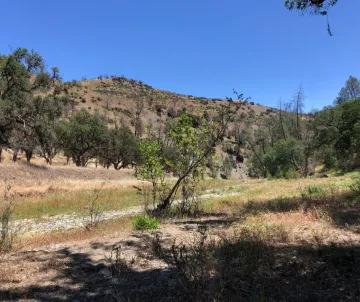
- The Pacheco Reservoir Expansion Project would destroy oak and sycamore forests and riparian habitat in the reservoir footprint, create new barriers to wildlife migration, and damage water quality in Pacheco Creek, the Pajaro River, and the Monterey Bay.
- The Draft Environmental Impact Report completed in 2021 documented 13 "significant and unavoidable" impacts, including impacts on protected species and on irreplaceable cultural resources. Specifically, archaeological surveys have documented at least 32 cultural sites that would be degraded or destroyed by the construction of the Pacheco Dam.
- The Feasibility Study assigns monetary value to the environmental benefit for Steelhead in Pacheco Creek in the cost-benefit analysis, but the environmental damage is not counted as a cost. The inundation of 23 acres of riparian habitat, 189 acres of old-growth oak woodlands, and unknown acres of old-growth Sycamore Woodlands cannot be mitigated.
- There is a clear risk that the additional flows provided by this project would not substantially increase the Steelhead population in the Pajaro River or in Pacheco Creek. (Valley Water does not have a good track record of increasing Steelhead populations in other watersheds.)
- The carbon intensity of the PREP is one of the most concerning impacts of the project. There would be impacts on so many levels including construction materials, mining, transportation, and deforestation, and then during operation there would be pumping of water into Pacheco Reservoir from San Luis Reservoir and there would be significant surface water methane releases. We are in a climate emergency and this project would take us in the wrong direction when it comes to mitigating climate change.
- Costs will far exceed $2.5 billion in the long run. Unforeseen issues will continue to arise and increase costs and timelines.
- The water supply benefits that would result from this project are not worth the cost. A small amount of emergency supply and some supposed water quality benefits are not worth $2.5 billion. The impact of this project on ratepayers would be significant. We should not be burdened to that extent for so little benefit.
- This very expensive insurance policy would increase water rates, already planned at 10% per year for at least the next seven years. Other less damaging insurance policies are already in the works: increased recycling, dam repairs, reducing leaks, conservation, and much more.
- As costs continue to increase, it is evident that the Pacheco Reservoir project is not a good return on investment, and that continuing with this project would hamper Valley Water’s ability to address other priorities.
We communicated our concerns to the CWC through public comment and comment letters, warning them about significant delays and cost increases, environmental impacts and mitigation, water quality, permitting challenges, doubts about benefits to Steelhead, preferable alternatives, lack of partners, lack of transparency and public outreach, and basic project feasibility. We also discussed many of these concerns in private meetings with Valley Water directors and staff, and with elected officials from other agencies.
In 2022, along with the Amah Mutsun Tribal Band, we joined a California Environmental Quality Act lawsuit filed by Stop Pacheco Dam, challenging the use of a categorical exemption for extensive and environmentally damaging geotechnical investigations involving helicopters, significant off-road travel, and many other damaging activities. The lawsuit prevailed and eventually Valley Water compiled an Environmental Impact Report for the investigations. The lawsuit slowed the project by approximately two years.
Stop Pacheco Dam came on the scene in 2021, adding significant funding and resources to convene a broader coalition of environmental advocates, create a website and fact sheets, and bring legal resources to oppose the PREP.
We commented on four environmental impact documents related to the project (in 2019, 2022, 2024 and 2025), asking for additional information, analysis, and mitigation measures to make sure that environmental impacts were identified and mitigated to the greatest extent feasible.
We asked for more information to be included in planning documents and reports, and we successfully lobbied Valley Water to schedule six board workshops deeply exploring various aspects of the project, including cost, environmental impacts and mitigation, and partnerships.
Our actions stymied Valley Water’s progress on design and permitting, but in the end the project failed because, even after eight years, Valley Water didn’t have any assurance from the Bureau of Reclamation that imported water could be stored in the reservoir.
No matter the reason for canceling the Pacheco Reservoir Project, the environmental community is thrilled that this environmentally catastrophic project will not progress. Precious lands in the Diablo Range have been spared. Let’s continue to work together with our allies to protect these lands with conservation easements or other mechanisms, in order to avoid a repeat of the last eight years. Cheers!