March 3, 2025
San José Zoning Administrator
San José Planning Division
200 E. Santa Clara St.
San José, CA 95113
Subject: TR24-569: Opposition to Removal of Two Coast Live Oak Trees at 5131 Ishimatsu Place
Dear Project Manager Rina Shah,
The Sierra Club Loma Prieta Chapter and the Santa Clara Valley Bird Alliance strongly oppose the proposed removal of two mature Coast Live Oak (Quercus agrifolia) trees located at 5131 Ishimatsu Place, as detailed in the arborist report prepared by A Plus Tree LLC. These trees provide significant ecological, aesthetic, and community benefits, and their removal should be reconsidered in light of their continued viability and importance.
The Importance of Large Coast Live Oaks
Coast Live Oaks are keystone species in California’s ecosystems, providing habitat, stabilizing soil, and sequestering carbon. Large, mature oaks are particularly valuable due to their extensive root systems and ability to support diverse wildlife, including birds, pollinators, and other fauna. Removing such trees diminishes these ecosystem functions and contributes to habitat loss.
Scientific research confirms that mature oaks continue to provide substantial environmental benefits, even when some structural defects are present. “Over 300 species of wildlife use our native oak woodlands (Quercus) for food, shelter, and nest sites.”1 “Native oaks are the most valuable tree for wildlife in 84 percent of the counties in the United States in which they occur,” says Doug Tallamy, a University of Delaware entomologist and author of the 2021 book The Nature of Oaks.
According to the USDA Forest Service, older trees store significantly more carbon than younger replacements and serve as critical anchors for biodiversity (Nowak & Greenfield, 2018). Furthermore, studies indicate that veteran trees with cavities and hollows support unique ecological niches, which younger trees cannot immediately replace (Lindenmayer et al., 2014)2.
The City of San Jose recognizes the importance of large native oaks
San Jose Envision 2040 General Plan Goal MS-21 – Community Forest includes policies that aim to protect mature and large-canopy trees, especially native trees.
MS-21.4 Encourage the maintenance of mature trees, especially natives, on public and private property as an integral part of the community forest. Prior to allowing the removal of any mature tree, pursue all reasonable measures to preserve it.
MS-21.5 As part of the development review process, preserve protected trees (as defined by the Municipal Code), and other significant trees. Avoid any adverse affect on the health and longevity of protected or other significant trees through appropriate design measures and construction practices.
Special priority should be given to the preservation of native oaks and native sycamores. When tree preservation is not feasible, include appropriate tree replacement, both in number and spread of canopy.”
Structural Concerns and Tree Longevity
The arborist report states that the larger oak has a hollow trunk and has experienced limb failure, but the arborist report also assigns a "Low" risk rating overall. This clearly indicates that risk mitigation, rather than removal, is feasible and is a better alternative to removal. Research supports the idea that hollow oaks can remain stable for decades. For example, retrenchment pruning, a widely accepted arboricultural practice, can extend the life of structurally compromised trees by reducing wind resistance and weight while maintaining habitat value (Shigo, 1986)3.
Additionally, the smaller oak, though lopsided, has a healthy canopy. While its lean is a concern, strategic pruning and possible cabling could redistribute weight and reduce risk, avoiding the need for removal. The mere presence of structural imperfections should not be the sole criterion for removal, as trees are dynamic organisms that adapt to their environments.
Precedent for Preservation
A similar case in San José demonstrates the value placed on mature oak trees. The Environmental Impact Report (EIR) for the San José Qume and Commerce project concluded that a similarly sized Valley Oak tree (204-inch circumference) was "irreplaceable". The project went to great lengths to protect this tree4. This precedent underscores the importance of considering alternatives to removal, as these trees hold ecological, historical and community significance that cannot be replaced.
Neighbor's Opposition to Removal
It is important to note that the neighbor, Lynn Rogers, who is purportedly impacted by the tree is opposed to its removal. Despite concerns raised in the arborist report about potential risks to adjacent properties, Lynn, the actual property owner nearest to the tree, values its presence and does not support removing the trees. Lynn shared with us that these trees are well known and loved by community members. This underscores the importance of exploring preservation strategies rather than proceeding with unnecessary removal.
Prohibition of Tree Work During Nesting Season
Large trees and trees with cavities, especially native Oaks, serve as important nesting sites for birds, many of which are protected under the Migratory Bird Treaty Act and California state law. Any pruning, removal, or major disturbance of these trees should be strictly prohibited during the nesting season (typically February through August) to prevent harm to nesting birds, their eggs, or fledglings. Disturbing active nests is both ecologically harmful and legally problematic. Prior to any work on these trees, a qualified biologist should conduct surveys to ensure compliance with wildlife protection laws.
Alternatives to Removal
Given the ecological value and continued viability of these trees, we urge the City to consider the following alternative approaches.
Retrenchment Pruning: Implement this technique to extend the lifespan of the larger oak while reducing potential limb failure.
Cabling or Bracing: For the leaning oak, structural support could provide additional stability and mitigate risk.
Periodic Risk Assessments: Regular monitoring by a certified arborist can ensure public safety while allowing the trees to continue providing benefits.
Long-term Replacement
The arborist report acknowledges low safety risk in the short-term. Replacement trees should be planted now to ensure a better replacement value before the mature trees are removed. Further, in accordance with the historical significance of large ancient native coast live oak and the ecological value of native coast live oaks, replacement trees should be native coast live oak, large canopy, and habitat supporting native trees. “The species presented as replacements fail to provide large canopies (poor heat island and CO2 mitigation) nor nearly the ecological value of native oaks.
As replacement oaks approach maturity and the safety risks of the targeted trees increase, they can be removed with far less impact than with immediate removal.
Removing these trees would result in a significant loss to the community and environment. The replacement trees, while valuable, will take decades to provide comparable ecosystem services. We respectfully request that the City deny the removal permit and instead require the HOA to pursue mitigation strategies that allow these vital oaks to persist.
Thank you for your consideration of this matter. Please do not hesitate to contact us if further discussion is needed.
Sincerely,
Shani Kleinhaus
Environmental Advocate
Santa Clara Valley Bird Alliance
Dashiell Leeds
Conservation Coordinator
Sierra Club Loma Prieta Chapter
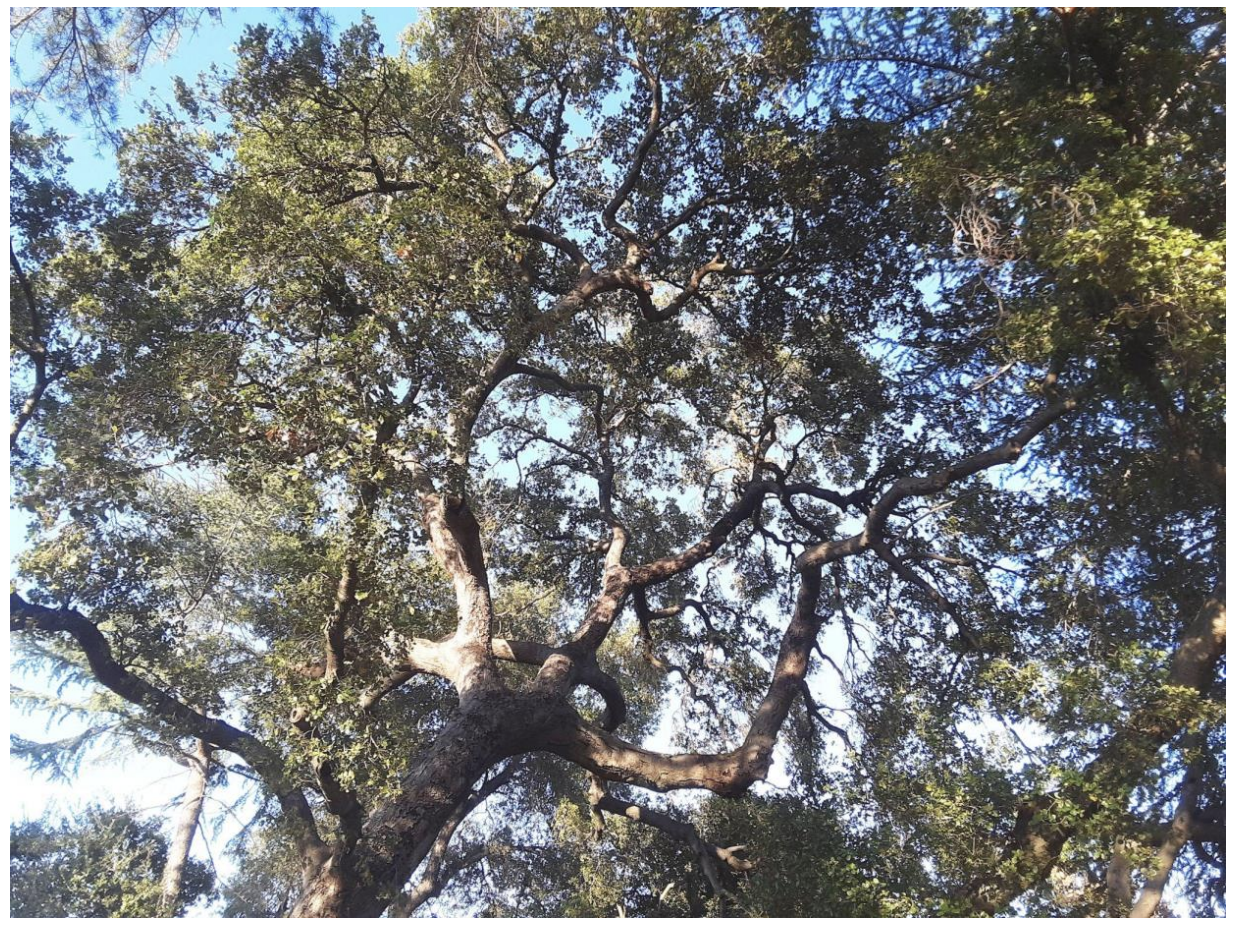
The existing large native oak canopy provides wildlife habitat, aesthetic beauty, cooling shade, and climate benefits.
1 Nancy Bower, author of The California Wildlife Habitat Garden (UC Press, 2012)
2 Harris, J. D., & Rudd, E. W. (2014). New policies for old trees: Averting a global crisis in a keystone ecological structure. ResearchGate.
3 Alex L. Shigo, A New Tree Biology: Facts, Photos, and Philosophies on Trees and Their Problems (Durham, NH: Shigo and Trees Associates, 1986).
4 https://ceqanet.opr.ca.gov/2022010603/3 Arborist report: “This oak is centuries old, existed well before the neighborhood was developed, and is doing well in spite of the structures and hardscape that have been built all around it. This oak is irreplaceable. Because of its veteran status, every effort must be made to respect its surroundings and reduce impact.”