By Karen Melton, Southeastern PA Group, and Michele Wellard, Assistant Director, Philadelphia Metro Wildlife Center
Philadelphia Metro Wildlife Center (PMWC) in Montgomery County is extremely busy year-round taking in three to four thousand animals and answering even more phone calls. With wildlife rehabbers certified in all PA wildlife species and more than fifty volunteers, it has been a recipient of multiple Sierra Club Huplits awards over the past six years for projects such as giving free wildlife presentations to schools, helping volunteers with the cost of vaccinations so they can care for rabies-vector species, and buying building materials for outside enclosures.
Recently a Great Horned Owl that had been tangled for an unknown number of days in a soccer net died after every effort to save it failed. Its death was suspected to be caused by Capture Myopathy, a condition caused by prolonged extreme stress, fear and muscle exertion causing breakdown of muscles including the heart and other organs. I interviewed Michele Wellard, Assistant Director at Philadelphia Metro Wildlife Center to talk about some of the ways in which humans inadvertently leave traps that are deadly for wildlife and she shared this list of hazards along with some remedies.
Sports net entanglements: (soccer, tennis, and batting cages) trap diving raptors and birds. Great Horned Owls in particular and less often hawks get caught in soccer nets, because of how they dive after prey. If soccer teams would put their nets away for the winter, this would save lives. Not only are the nets not used over the winter, but usually no one is frequenting the area, so an entangled bird may spend days before being noticed or succumbing.
Primary and secondary rodenticide poisoning: Rodent poisons accumulate in the food chain, causing prolonged death in raptors and carnivores such as foxes that feed on mice or rats that have consumed the poisons. Bait traps can be a hazard for your pets as well. Alternate methods of controlling rodents should be used rather than poisons. Wildlife exhibiting symptoms of poison usually cannot be saved.
Glue traps and sticky tapes: Glue traps used outside and in garages catch many songbirds as well as snakes. Lantern Fly sticky papers have greatly multiplied this hazard. Oils can be used as a solvent, but too much oil can itself be deadly, especially for birds. At PMWC we use it very sparingly. We advise people to put paper towels over the animal to prevent even more area becoming stuck and bring it to us in a dark box.
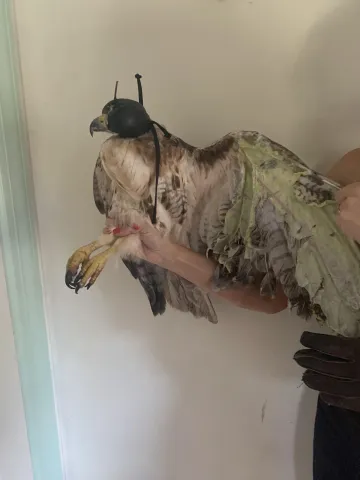
Sticky paper being removed from a hawk's wing. The hood helps calm the bird and reduces the stress of being handled. Image courtesy of MIchele Wellard
PPE & mask bands: Disposable face mask ear loops and elastics became common street trash during the pandemic. These can snare wildlife beaks, feet and wings. If you help with trash cleanups, please make sure even these small items get collected.
Berry bush netting: Many songbirds and snakes are trapped every year in berry netting -- catbirds and robins especially. Birds become entangled trying to eat berries and snakes have accidental contact with the netting on the ground, trapping and cutting them. Some internet sites recommend using a support frame so that netting is taut, securing it around the bottom, and removing it as soon as the berry season concludes. At PMWC we see so many animals caught in netting, we recommend not using it at all – share your berries and enjoy watching the robins.
Deep containers & buckets: Uncovered buckets, flowerpots, and grease traps can attract and trap birds and small mammals. Bird feathers are compromised by grease and tars, and cleaning may need to be done in multiple sessions -- too many Dawn baths can be as damaging as the grease. The natural oils in a bird’s feathers are essential.
Window wells: Uncovered holes strand small amphibians, snakes, and ground mammals especially baby bunnies that are just leaving mom, but other youngsters such as baby foxes have also been found trapped in window wells. If not rescued they will starve. Keep a cover or screen over your window wells.
Toxic fluids: Unsealed antifreeze (which attracts mammals with a sweet taste) causes renal failure, and open oils/chemicals destroy bird waterproofing and kill other wildlife. Don’t leave chemicals outside uncovered.
Dumpsters, recycling and trash bins: Raccoons are constantly getting into and subsequently can’t get out of dumpsters. You can help them get out by positioning a board or sturdy branch so they can climb out, and another outside the dumpster so they can climb to the ground. For Opossums trapped in recycling or trash bins, lay the container on its side and walk away. Opossums are very shy -- if it looked like it was dead, it was probably pretending and will disappear once you are gone. Come back and check in a few hours.
Vehicle collisions: Road strikes result in blunt-force trauma, fractures, orphaned young and countless deaths.
Glass collisions: Transparent or reflective windows cause massive annual bird fatalities. There are many products that can be applied to home windows that help birds see and avoid windows. Birds suffering from concussion may be able to recover when treated by rehabbers with an anti-inflammatory and fluids, along with days of rest in a dark, quiet space.
Domestic pet predation: Free-roaming cats kill and maim songbirds by the billions, as well as small mammals, and reptiles. Our native wildlife did not evolve around cats and do not have protective instincts. Keeping cats indoors or in a ‘catio’ is the best practice.
Litter & entanglement: Plastic six-pack rings, fishing lines, and trash restrict movement and cause fatal blockages. Many forms of trash can ensnare wildlife, causing cuts and other wounds, as well as loss of feathers. If found in time and brought for rehab, some can be treated with proper wound care, fluids, and time to heal and grow back feathers.
Intentional harm: Direct shooting; illegal trapping; and harassment and relocating perceived "nuisance" animals.
Every wildlife situation is unique. At PMWC we recommend a phone conversation before an animal is brought in, often asking for a photo or two to help us give the best advice. There are many situations, especially involving youngsters and fledgling birds, where it can appear a baby needs rescue, but actually should be left alone until the mother returns. We help people tell the difference, and when rescue is needed we can give direction for safely collecting and transporting the animal. We ask that you never try feeding – the wrong food can be more harmful than hunger. Much of our work is done over the phone and we are always happy to answer questions and talk you through any wildlife situation.
This blog was included as part of the December 2026 Sylvanian newsletter. Please click here to check out more articles from this edition!