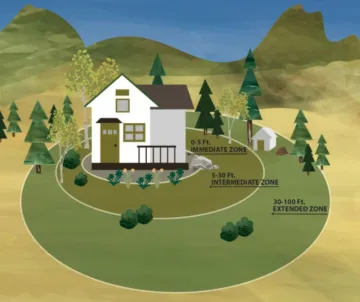
We recently examined the treatment of Zone 0, the “zero combustible” (immediate) zone to achieve maximal defensible space around a home or structure. To reduce wildfire risk, defensible space also requires a well-tended (intermediate) Zone 1, which encompasses the area 5 -30 feet away from a home or structure, and an (extended) Zone 2, which stretches to an additional 70 feet for a total defensible perimeter of 100 feet around a home or structure. While having little to no vegetation is necessary for an ideal Zone 0 (and, in California, may soon become mandatory), do Zones 1 and 2 also need to be devoid of living greenery, and must the aesthetics and beauty of plants and trees be sacrificed?
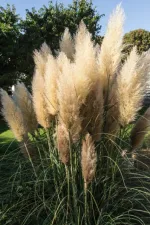
This is not the case for Zones 1 and 2. It is, however, important to consider removing highly flammable vegetation, especially non-native species, in Zone 1. Examples of highly flammable vegetation include:
- Grasses: pampas grass and fountain grass
- Shrubs: broom species, juniper, and rosemary
- Trees: eucalyptus (especially blue gum), most acacia species, cedar, palm trees, and pine trees
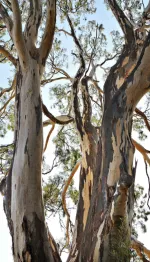
Flammable plants typically contain volatile oils, accumulate dead material, or have delicate, dry foliage. In the case of trees, shedding bark and dropping excessive ignitable debris are also characteristics.
If one already has these types of plants in their yard and decides to keep them, regular maintenance, such as pruning, clearing debris, and proper spacing, is essential to reduce hazards. For potentially problematic trees, it can be prudent to obtain a professional assessment from a licensed arborist or a local fire department. They can help one assess the tree’s condition, proximity to structures, and potential fire behavior to gauge whether to remove it or not.
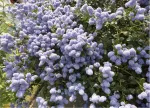
Characteristics of fire-resistant plants include supple, moist leaves, minimal resins and oils, watery sap with little odor, and an open-growth structure with space between branches. Fire-resistant trees and shrubs also have thick bark that doesn’t peel away from their trunks, an absence of dead branches, and minimal debris drop. Examples of fire-resistant species include the following:
- Grasses: blue grama, California lilac, and deergrass
- Shrubs: manzanita, succulents, ceanothus, and Russian sage
- Trees: redwoods, oaks, and bay laurel
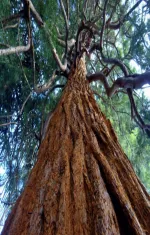
Consulting with a knowledgeable landscaper about firewise landscaping can help guide future plant and tree choices.
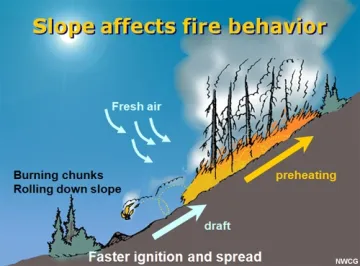
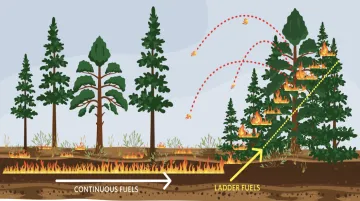
In addition to using fire-resistant plants and trees, firewise landscaping includes groupings with staggered heights and open spaces to disrupt fire paths, gravel pathways, or stone borders to create natural breaks between clusters, and raised beds or retaining walls to add additional barriers. Trees should be spaced 10-30 feet apart, taking into account the effects of slope, as fire travels faster upslope.
The crowns of trees should be 10 feet apart and have a horizontal clearance of 10 feet from structures. New trees should be planted at least 30 feet away from structures, and there should be no ladder fuels within 3 feet of trees.
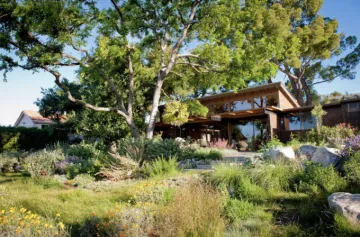
In summary, landscaping in areas prone to wildfires is more complex than in regions with lower risks; do aesthetics and the beauty of plants and trees need to be sacrificed? Absolutely not!