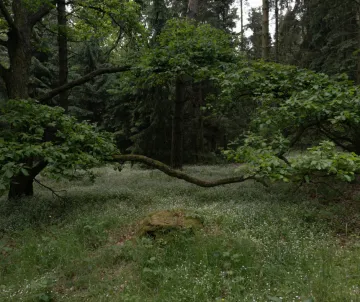
Oak woodlands don’t get the fanfare of redwoods, but in the Santa Cruz Mountains, they're among the most important ecological heavyweights the Loma Prieta Chapter works to protect. These landscapes store carbon, anchor biodiversity, stabilize slopes, and buffer wildfire. As climate change accelerates, oaks aren’t just important; they’re indispensable. Protecting these ecosystems is one of the smartest, most cost‑effective mitigation strategies our region has.
These woodlands also deserve protection because they hold deep cultural and spiritual significance for Amah Mutsun and Ohlone peoples, who have long stewarded these landscapes through cultural burning and acorn traditions that sustain both community and ecosystem.
Oak woodlands support more wildlife species than any other terrestrial habitat in California. In our chapter region, they feed and shelter many animals: Acorn woodpeckers and other cavity nesters, Dusky-footed woodrats, bobcats, foxes, mountain lions, pollinators, raptors, and hundreds of insect species.

Acorns, the fruit of the oak tree, are winter energy bars, a seasonal nutrient jackpot that keeps wildlife alive when everything else becomes scarce.

Soil, Water, and Climate Stability
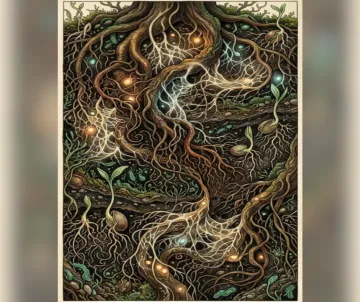
Oak roots grip steep slopes, increase water infiltration, and build rich, fungal‑dominated soils that store carbon long-term, retain moisture during drought, and support native understory plants like toyon and coffeeberry. The mycorrhizal networks beneath oak woodlands are underground fungal highways that help trees share nutrients and water. They provide climate resilience with Wi‑Fi‑level connectivity.
Indigenous Stewardship and Cultural Importance
For millennia, Amah Mutsun and Ohlone peoples tended oak landscapes through cultural burning and acorn management. Their practices increased acorn yields, reduced pests, and maintained open, park‑like woodlands. However, for these peoples, oak woodlands are not just food sources or ecosystems; they are relatives, ceremonial spaces, and living beings the Creator placed in human care. Oaks carry spiritual significance, tied to reciprocity, obligation, and identity. Religiously, acorns were tied to the shaman’s role in ensuring abundant growth. People offered seeds, shell beads, or tobacco to the sun and nature spirits, and acorn harvests were part of ceremonies asking for plentiful food, fish, and game. The acorn’s seasonal availability made it a symbol of survival and reciprocity with the land. Restoring Indigenous stewardship is essential to restoring oak ecosystems.
Natural Wildfire Buffers
Oak woodlands are surprisingly fire‑resilient. Coast live oaks and valley oaks maintain high canopy moisture, resprout after fire, break fuel continuity, and reduce flame lengths and radiant heat.
In Wildland-Urban Interface (WUI) communities, oak woodlands often act as natural fire breaks, reducing the risk of structure‑to‑structure ignition. Oaks can be a lifesaver, especially in dense neighborhoods where radiant heat can be the real arsonist.
Threats in the Loma Prieta Region
Oak woodlands face mounting pressures from Sudden Oak Death and the Mediterranean Wood Borer, invasive species like brooms and barbed goatgrass, development in foothill and WUI zones, poorly planned fire suppression projects, and climate‑driven drought stress.
These threats make oak protection a frontline conservation priority.
How the Loma Prieta Chapter Is Taking Action
Our chapter is working to protect oak woodlands by opposing harmful development in oak-rich foothills, supporting prescribed fire and cultural burning where appropriate, advocating for climate-smart land-use planning, educating residents about SOD, defensible space, and native plant restoration, and promoting home-hardening that protects communities from wildfire without removing ecologically valuable oaks.
Resources
Priority Habitats: Oak Woodlands - California Native Plant Society
Sudden Oak Death: Ecological Impact on California Forests
The Hidden World Beneath Oak Forests: Roots, Mycelium, and Soil Science | Frame & Focal
The Nature of Oaks: The Rich Ecology of Our Most Essential Native Trees, by Douglas W. Tallamy, Timber Press, 2021