Maryland’s 2026 General Assembly session ended at midnight on Monday, April 13. Our Chapter had some important successes, but this was a challenging session where we at times needed to work hard against proposals to weaken Maryland’s existing environmental programs. Nevertheless, the Chapter’s staff and volunteers played major roles in advancing our priorities, mitigating proposed environmental rollbacks, and positioning our bills well for further progress in 2027.
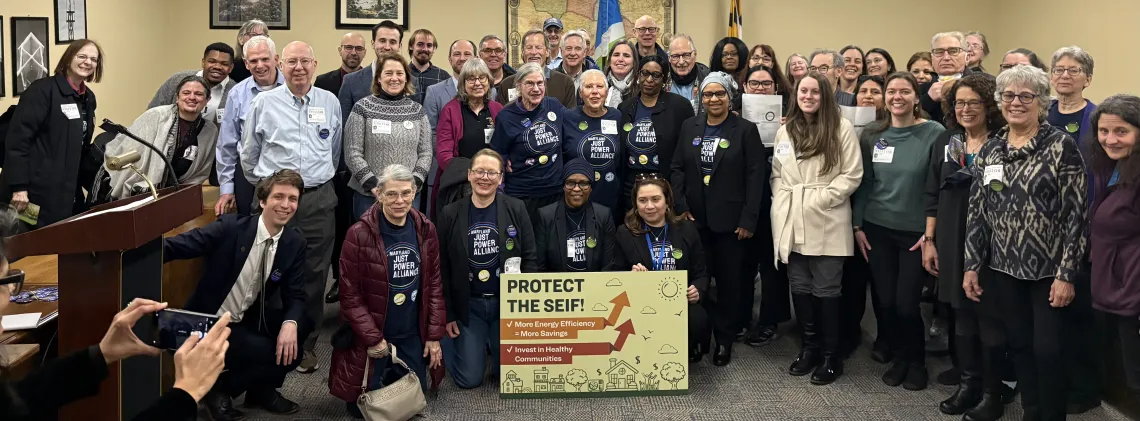
Sierra Club members and partners at a rally to protect the Strategic Energy Investment Fund (SEIF).
We submitted testimony on nearly ninety distinct bills (and about 120 when counting both the House and Senate versions). Moreover, we worked with our allies in the General Assembly and partner environmental entities to develop and refine bills across the wide range of clean energy, transportation, biodiversity, zero waste, voting, and cross-cutting environmental issues. Your continued engagement in all of these areas will be helpful at the implementation stage and in next year’s legislative session.
Please join us for a Legislative Debrief on Wednesday, April 29, from 6:00-7:30 PM. Register here. The Debrief will discuss the bills mentioned below and also begin the planning conversation on next steps for legislative, regulatory and administrative engagement, as well as public awareness and education. We encourage everyone to attend, as this is a natural follow-up to Lobby Night, Action Alerts, and other chances to get involved with the Chapter’s efforts.
Below are some of the environmental highlights from this session.
Environmental Victories
✅ Helped lead analysis and advocacy to successfully enact $73 million of funding through the Strategic Energy Investment Fund for a pilot program to demonstrate the benefits of electric heat pumps to reduce energy consumption and improve affordability for low-income households. This was one of our top three priorities for the session.
✅ Helped shape the Utility RELIEF Act, a broad energy package that will promote portable solar panels for renters and homeowners (“balcony solar”), management of electricity use to reduce peak loads, advanced transmission technologies that carry power more cost-effectively and with less environmental impact than legacy technology, and improved policies to manage data center impacts, among many other provisions. Through the hard work of Josh Tulkin, Chris Stix, and our Clean Energy and Communications Teams, we also helped reduce cuts to the EmPOWER program, Maryland’s premier energy conservation program, that otherwise would have been included in the bill.
✅ Helped craft and pass legislation to begin the process of cataloging and protecting vernal pools – temporary wetlands that are essential for some amphibians and other wildlife.
✅ Advocated for and helped pass legislation to ensure that two important natural areas in our state – the Beltsville Agricultural Research Center and the Patuxent Research Refuge – have zoning protections that will protect them from development.
✅ Supported successful legislation to reduce the dangers from spreading sewage sludge with PFAS contamination on Maryland lands.
✅ Successfully advocated for additional design funding for the construction of Fifth Bus Division in Baltimore needed to implement the Bmore Bus transit plan.
✅ Helped pass legislation to promote transit-oriented development near rail stations.
✅ Helped pass legislation to reduce barriers to electric vehicle charging in common areas of condominiums and homes that belong to a homeowners association.
✅ Helped pass legislation for establishment of an on-farm organics diversion and recycling grant program.
✅ Helped pass legislation to protect voting rights in Maryland law and provide a backstop against possible weakening of federal law or enforcement.
Looking Forward
Transportation
Unfortunately, the Transportation and Climate Alignment Act, one of our top priorities, did not cross the finish line this year. It passed the House and the Senate Budget and Taxation Committee but ran out of time in the Senate again. The bill would require the State to offset pollution from highway expansion projects by investing in public transit, walking, and biking projects. Lindsey Mendelson (our Senior Transportation Campaign Representative) and our partners worked tirelessly on this bill, including countless hours with committee leadership to identify changes to help it advance it out the Budget and Taxation Committee.
We remain strongly committed to advancing the policies in the bill, which will help give Marylanders more affordable and sustainable transportation options. The Maryland Department of Transportation is already starting to adopt aspects of this bill related to the Governor’s executive order on climate change, and we will be continuing to work with them to ensure effective implementation.
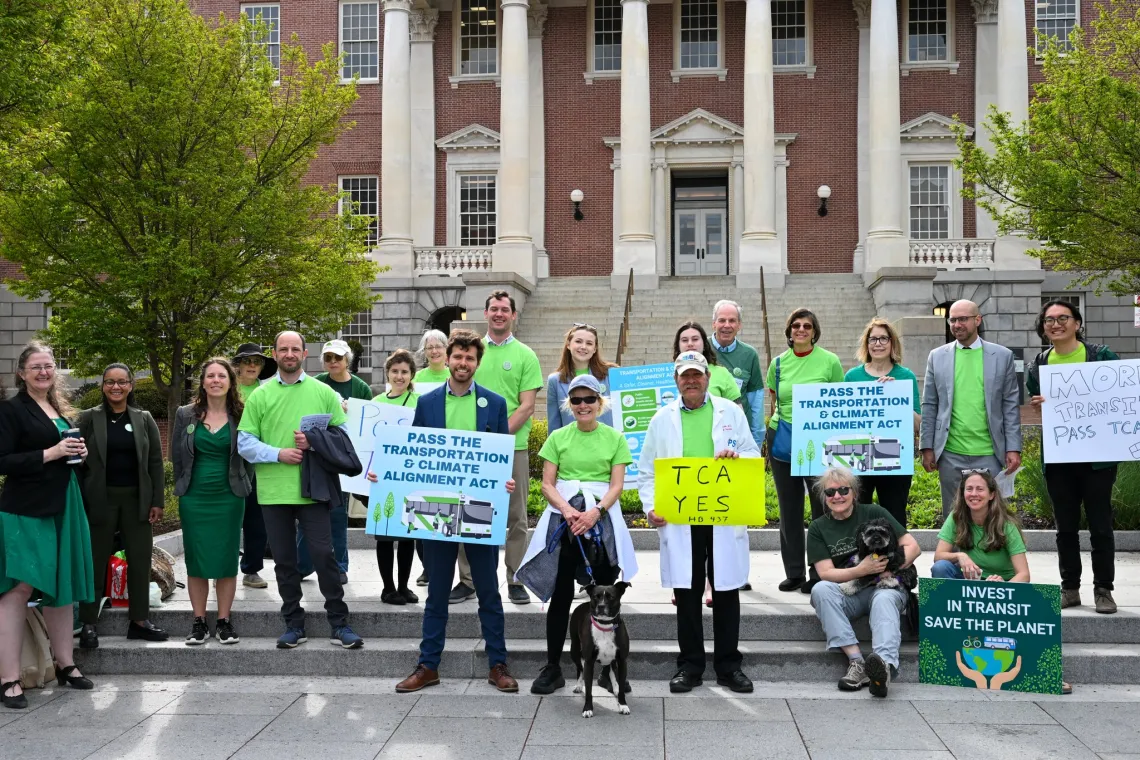
Sine Die rally to help pass the Transportation and Climate Alignment Act.
Zero Waste
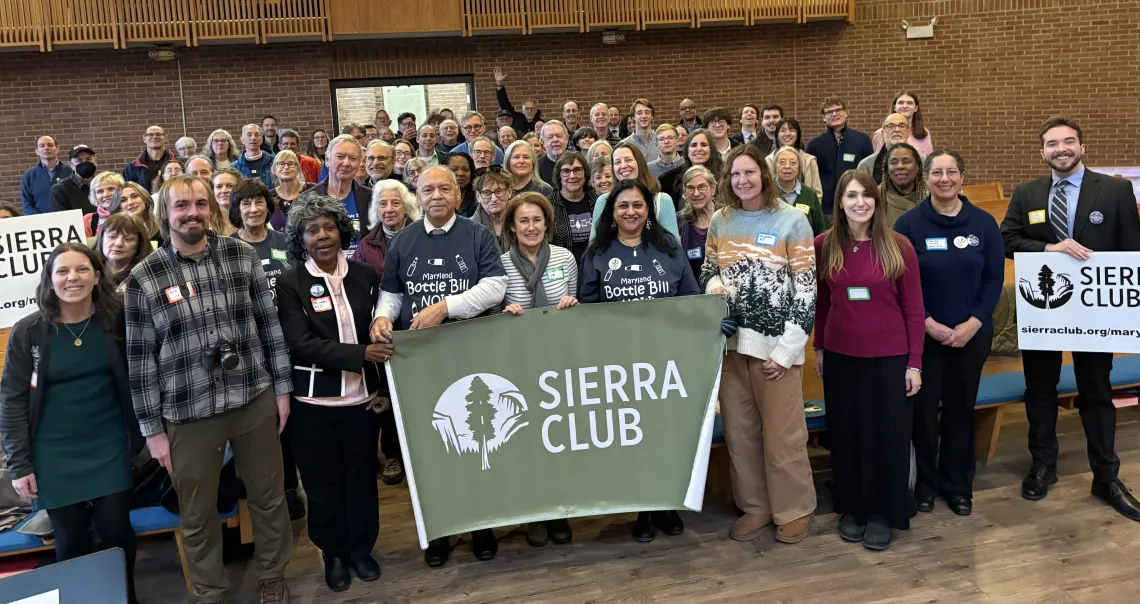
The Maryland Bottle Bill continued to make progress and garner new support. This priority bill would reduce beverage container litter and plastic pollution by establishing a beverage container deposit-return system. Martha Ainsworth, the Zero Waste Team, and partners in the Maryland Bottle Bill Coalition worked with bill sponsors and stakeholders on amendments to improve the bill. The amendments were discussed in an Environment and Transportation Committee work session.
In addition, the chairmen of the House Appropriations Committee and of the Senate Budget and Taxation Committee directed the Maryland Department of the Environment to deliver a report by December 2026 on the resources necessary to implement the bill and how it can complement implementation of the extended producer responsibility for packaging program that passed last year. Coming out of this session, the Bottle Bill is stronger, has more support, and is well-positioned for the 2027 session.
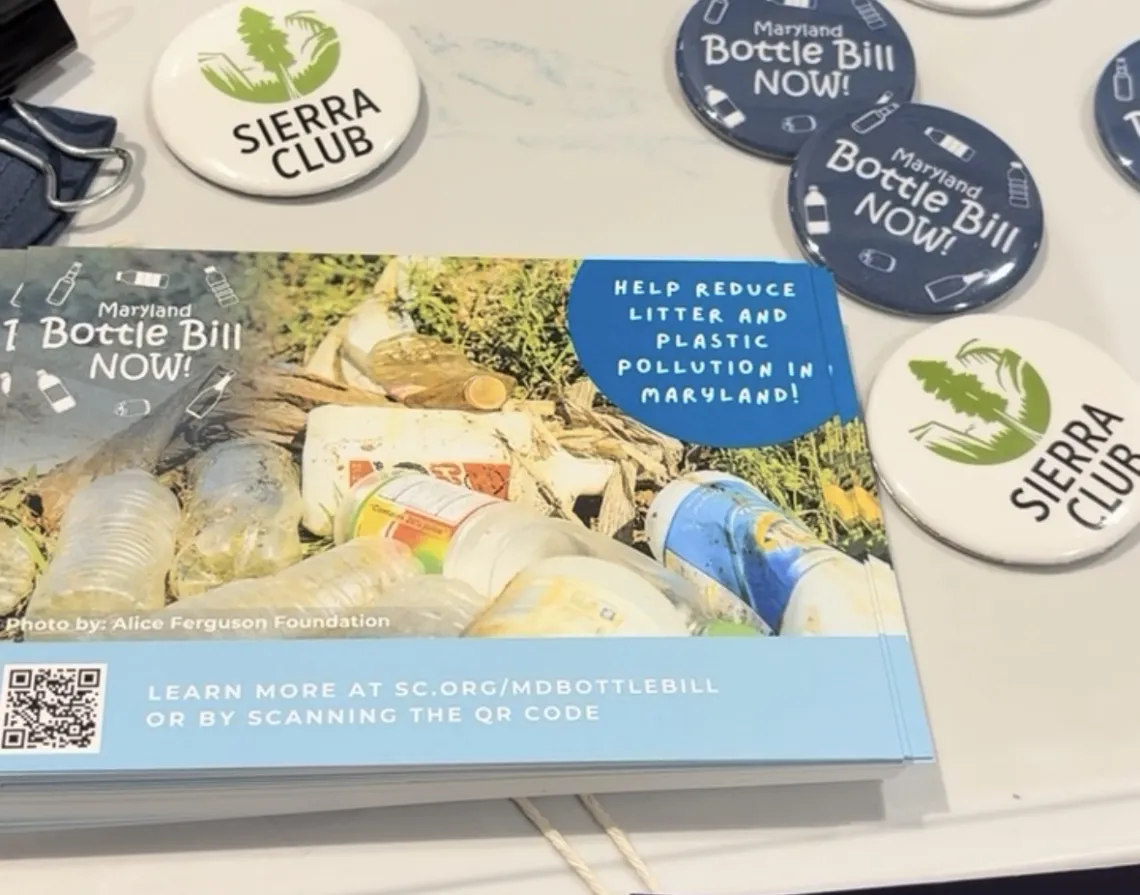
Bottle Bill postcards, buttons, and Sierra Club buttons.
Natural Places and Related Issues
While we successfully restored budget funding for a native plant expert in the University of Maryland Extension program and helped pass a bill to protect the unique habitat of vernal pools, we again faced difficulty enacting the modest requirement that the State of Maryland adopt electric leaf-blowing equipment when its gas equipment wears out. Gasoline-powered lawn equipment is surprisingly harmful to users and communities due to its high levels of noise and air pollution.
We also supported legislation to strengthen stream protections and will continue to seek better laws and regulations to protect this important habitat. Marie LaPorte and the Biodiversity and Natural Places Team worked tirelessly on these issues and the full range of B&NP matters.
Elections and Democracy
The Senate passed a bill that would have required special elections to fill vacancies in the General Assembly that occur during the first two years of each term and thereby increase voters’ ability to select their legislators. Unfortunately, the bill was amended late in the session in a way that made its passage more difficult, and it stalled. We remain hopeful that this important reform will become law soon. Rich Norling provided outstanding leadership on bills in this area, which are foundational to both environmental progress and social equity.
Next Steps and Thanks
Looking to the 2027 session, we can already see several valuable initiatives that could use your engagement. These are likely to include our efforts to address the growing energy and other environmental impacts of data centers; protect overburdened communities from polluting facilities; improve transit, cycling and pedestrian transportation; enact the bottle bill and reduce waste; protect natural areas and wildlife habitat; reduce use of highly polluting lawn care equipment; and support efforts to improve representative government in our state. Please be on the lookout for chances to join in these efforts.
Finally, while this was a challenging session, we are fortunate to have legislators who, both as a group and in their leadership, are outstanding. Our legislators were consistently open and supportive in our discussions of our top priorities and of targets of opportunity that will make a difference in Maryland. While we would like to thank all the volunteers and legislators who helped advance environmental priorities this session, we would like to particularly thank Speaker Joseline Peña-Melnyk, Senate President Bill Ferguson, Chairs Ben Barnes, Brian Feldman, Guy Guzzone, and Marc Korman, Delegates Regina Boyce, Lorig Charkoudian, Mark Edelson, David Fraser-Hidalgo, Terri Hill, Mary Lehman, Robbyn Lewis, Dana Stein, Jen Terrasa, and Courtney Watson and Senators Ben Brooks, Katie Fry Hester, Shelly Hettleman, Cheryl Kagan, Sara Love, Jim Rosapepe, and Mary Washington for their leadership.
We also thank officials at the Maryland Department of the Environment, Maryland Department of Natural Resources, Maryland Department of Transportation, and the Maryland Office of People’s Counsel who shared their time and expertise with us. In addition to attending our online Legislative Debrief on April 29, please plan to join us in person on May 3 for our Annual Legislative Appreciation Party.