Introduction by Chapter Director
Conservation Sub-committee Reports
1. Air Quality
2. Climate Action Leadership Team
3. Food
4. Forest Protection
5. Fracking Action
6. Open Space
7. Soils
8. Sustainable Land Use (SLU)
9. Transportation
10. Water
Outing Groups Reports
1. Black Mountain Hiking Section
2. Day Hiking Section
3. Peak Climbing Section
6. San Mateo Hiking Section
7. Singleaires
8. Loma Prieta Gay and Lesbian Sierrans
9. Loma Prieta Sierra Singles (LPSS)
10. Loma Prieta Ski Touring Section (STS)
Regional Groups
1. The San Carlos/Belmont Regional Group

Dear Loma Prieta Chapter community,
This past August, I was fortunate to host family from overseas, and to help them experience the nature of our region. I took them to Yosemite Valley, Monterey Bay National Marine Sanctuary, the Marin Headlands, and Mt. Tamalpais, Big Basin and Calaveras Big Trees State Parks.
After one week my ten-year-old nephew asked, “Why are all these incredible places in California?”
I responded instinctively “Because of people who care.”
To our chapter members, activists, leaders and donors, thank you for being those “people who care”.
I'm constantly amazed by the passion, commitment, expertise and energy that our chapter volunteers share so that “all these incredible places” survive for future generations to explore and enjoy, and to care to protect.
Few people know the breadth and depth of our chapter's work, which is why I am happy to present the Loma Prieta Chapter's 2017 Annual Review, published February 2018.
Our chapter has thirteen outings sections, that every year plan and host hundreds of hikes and other outdoor adventures for thousands of participants to “explore and enjoy” nature.
Our chapter's Conservation Committee has many issue groups that tackle some of the most complex challenges of the day, from air quality to housing to transportation to water. These groups actually win significant local conservation battles, which you can read in our eNewsletters, website and Annual Report.
We are effective in exploring, enjoying and protecting “all these incredible places” because our members, activists, leaders and donors are “people who care”.
James Eggers, Chapter Director
Sierra Club Loma Prieta
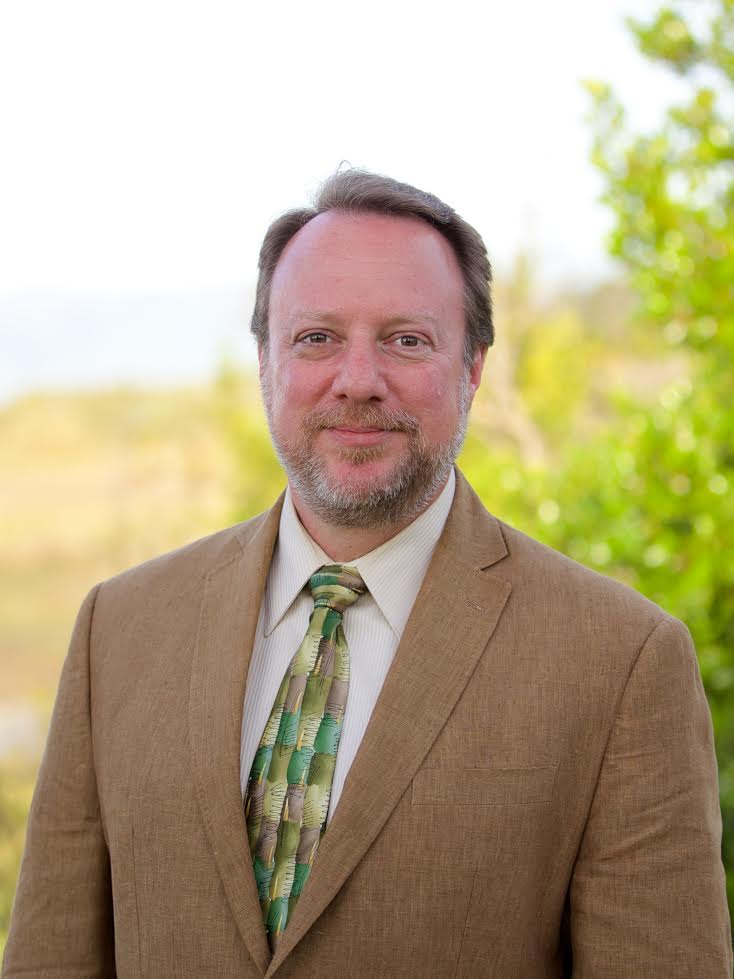
The Air Quality Committee is a sub-committee of the Conservation Committee. It is dedicated to promoting better air quality primarily by monitoring the actions of the Bay Area Air Quality Management District. The goal of this committee is to combat air pollution within the Santa Clara Valley, as well as advocate for strong State-wide legislation and regulation.
The Loma Prieta Air Quality Committee has supported the Clean Air Plan, produced by the Bay Area Air Quality Management District. The goal of the Clean Air Plan is to provide a “long-range vision of how the Bay Area could look and function in a 2050 post-carbon economy”. The plan is graphically described in a brief youtube video.
In 2017, the state passed the Community Air Protection Program (AB617). The purpose of this program is to reduce air pollution in impacted communities. These communities are often in low-income neighborhoods. The Sierra Club recognizes that this is an environmental justice issue and so has attended and spoken at numerous public District Board meetings to develop the new air quality regulations pertaining to this program.
In 2018, the committee arranged for a new type of air quality monitor, called a community monitor, to be used in Cupertino to monitor the air quality near the Lehigh Cement Plant, which is the biggest single emitter of pollutants in the Southbay. The Lehigh Cement Plant in Cupertino creates negative environmental impacts on the local community. As the limestone is processed to create cement, unhealthy chemicals like mercury, ammonia, nitrous oxides and dioxins are released into the air and can have enormous health consequences. The results of that monitoring can be observed at the manufacturer’s website, Clarity.io. Clarity has several monitors in operation throughout the Bay Area. This type of monitoring is an important step to combating air pollution, as the quantification of air quality in the community is the first step to determining how to determine measurable change.
Moving forward, the 2018 committee will continue to stay engaged with the District and communities in the Loma Preita Chapter who are concerned about stationary sources.
Reported by Gary Latshaw, Chair, Air Quality Committee
Written by Shireen Cheng
Climate Action Leadership Team
We had a really good year on the Climate Action Leadership Team. San Mateo County’s Peninsula Clean Energy completed a year and paid of 100% of the loans used to start the public generating utility for electricity. CALT had asked for a 100% renewable option which we got. We had pushed for it to be the default but only Portola Valley chose to do that. SVCE provides 100% renewable energy. It is the first CCE to go to the default 100% option. This is a huge win for renewables because only 33% of PG&E’s power is renewable.
CALT volunteers were immensely successful in beating back a privatization attempt in San Jose and getting San Jose Clean Energy started. The SJCE will begin selling power in about three months. San Jose is now the largest CCE single jurisdiction in CA. CALT volunteers worked on campaigns and politicians to bring about the change.
Strong leadership on the board of PCE from Medina in San Bruno, Keener in Pacifica, Aalfs in Portola Valley, Gupta in South San Francisco, Bonilla in San Mateo, Rarback in Half Moon Bay, Degolia in Atherton, and Romero in East Palo Alto will lead to CALT’s second goal of local programs that will green our electric grid with local renewal power and create local jobs. Both PCE and SVCE have formed Citizen Advisory Committees. Gladwyn in on the PCE CAC. CALT will push our local politicians not to be pragmatic, popular, and cautious about how their next election will be financed. We want to elect council people who will use Peninsula Clean Energy and Silicon Valley Clean Energy to achieve a 100% clean energy future for all of us.
CALT is also fighting a rearguard action against PG&E. Last year they tried to destroy the new public utilities by requiring exit fees. This year they are trying to put in a ten-year delay before a public utility can come online. They are working to weaken the definition of Big Hydro so that less wind and solar will be required under the Renewable Portfolio Standard. There is also an attempt to regionalize the CA grid with the western states which will dilute our renewable power with fossil fuels and create a market for coal power. AB 813 is going to be a challenge for us. There are many areas where we can use volunteers from reach out to elected officials to working with local governments on local renewable energy programs. Please leave a message with your contact info and interest area for Gladwyn d’Souza at 650-458-7436 if you want to help.
Report by co-chair Gladwyn d’Souza
In 2016 we started a food exchange. The food exchange in Belmont is for surplus garden growth; it ended one full year of successful exchanging. Membership is now over 40 people. Produce, poultry, and finished products like jam are exchanged. If you need help starting a food exchange in your city call me.
The farm bill which should really be called the "Handouts to large mono-crop and CAFO producers” is coming up for renewal. Advocates have begun to form local interest advocacy groups to reach our to our local congresspersons. Food Policy Councils continue to be seen as the next step in developing a robust climate resilient local food system.
I am now teaching class in beginning and advanced compost (include worm compost.) If you have questions or a group that needs a class please give me a call.
Gladwyn spoke at the Urban Agriculture and Gardening Form on a panel on Urban Agriculture on 5/30/17 on community gardens, education, and best practices.
These bills were signed by the Governor: AB984 changed food labels to reduce food waste. AB841 protects kids from junk food ads on campus. AB1219 Protects good-faith donors of gleaned and recovered foods from liability SB138 Enhances access to free and reduced meals to low-income students
Bills currently in the legislature for 2018: AB164 to improve food assistance. AB626 Would allow microenterprise food businesses to use home kitchens SB602 Would place a warning label on Neonic pesticides to protect bees SB623 Would establish a fund to ensure all Californians have access to safe drinking water. Of these bills, SB602 could use your help.
In 2017 the Forest Protection Committee worked closely with the Stop Clearcutting California Campaign to build demand to stop clearcutting in California and participated in a local forest outing.
- We passed resolutions calling for a ban on clearcutting in California in two cities: Cupertino and San Mateo --- bringing the number of cities the Campaign has encouraged to pass the resolution to 11.
- We persuaded Santa Clara County to add a ban on clearcutting to their list of legislation they would like to see.
- One of our members persuaded the San Mateo County Democratic Party to pass a resolution calling for cities in San Mateo County to pass a resolutions calling for a ban on clearcutting.
- We published one letter in the San Francisco Chronicle, and we submitted over 12 letters.
- We posted many entries to Facebook.com/clearcutting.
- We gathered signatures on a petition to Brown at a San Mateo County Democratic picnic.
- We are actively working with San Mateo County and MidPen Open Space to pass resolutions and with Menlo Park Mayor Kirsten Keith to develop a plan to bring clearcutting to the California League of Cities.
- We arranged for Sierra Club California Staffer Daniel Barard to present to Conservation Stewardship Program about his biomass campaign.
- We toured Soquel Demonstration Forest.
The Fracking Action subcommittee is dedicated to educating the community on the hazards of fracking, as well as engaging in discussions around the region to prevent fracking. The goal of the committee is to keep local air and water clean by preventing the expansion of oil and gas drilling operations within the chapter’s borders.
In 2017, the Bureau of Land Management (BLM) explored the potential of leasing public land for oil and gas extraction. The Anti-Fracking committee took steps to protest the leasing plans by commenting at public hearings and submitting a letter to the BLM, laying out the top reasons fracking is harmful for the community and environment. As of the April of 2018, the BLM has no current plans to lease public land for gas and oil development in California.
In recent years, the committee has helped environmentalists and community organizers in San Benito and Monterey County to pass legislation banning fracking in their respective counties. The committee is currently part of a coalition of local NGOs dedicated to persuading Santa Clara County (SCC) to make a similar commitment. The coalition is engaged in dialogue with SCC Supervisors and their staff in attempt to draft an anti-fracking resolution.
In the summer of 2017, SCC passed a resolution to honor the goals and objectives of the Paris Climate Accord. They also established The County Coalition in hopes of getting other counties to join them. The Coalition’s goal is the spread awareness, share information and applaud counties who have taken action on climate issues. In 2018, SCC established an Office of Sustainability and hired a director. The Fracking Action Subcommittee is continuously engaged in an open dialogue with SCC and the respective personnel to assist in developing strategies that support the County’s goals of combating climate change and becoming more sustainable.
Reported by Mike Kerhin, Chair of Chapter Conservation Sub-committee on Anti-Fracking
Written by Shireen Cheng
Reported by Dave Poeschel, Sub-committee Chair
The Open Space Sub-committee is a loose affiliation of Sierra Club activists working to protect open space by directing growth upward rather than outward in order to protect wildlife habitat, provide for rest and recreation, reduce greenhouse gas production, and support environmental justice and other goals and Sub-committees of the Sierra Club. We often work with our region's other environmental organizations and help lead communities and instruct them on how to participate in and promote our shared interests in governmental planning and decision-making processes.
With our 2016 contributions to the successful effort to prevent the City of Morgan Hill from annexing and developing the 660 acres of agricultural lands in its southeast quadrant, the Santa Clara Valley Open Space District has received state conservation dollars and has been able to purchase a conservation over an initial 70 acres. We encouraged the adoption of the new Santa Clara County Agriculture Plan, created to help prevent future conversion of South County agricultural lands to development. The Santa Clara County Board of Supervisors has adopted the plan and is currently selecting a task force to refine and implement the plan so we are working to ensure that the Santa Clara Open Space Authority and environmental community has a voice in this task force.
Preserving our open space has benefits for many ecosystem services including reduced greenhouse gas production and provides opportunities to sequester carbon. So as part of the City of San Jose' Climate Smart plan to meet the Paris Accord climate goals, along with our environmental partners, we successfully advocated for a "Phase II" activity to study the climate advantages of preserving open space, also known as Natural and Working Lands (NWL).
We continue our efforts to protect Coyote Valley. We helped apply pressure to encourage the City not to rezone agricultural land for a warehouse/distribution center. Our efforts provided the opportunity for the Peninsula Open Space Authority to purchase the property and another nearby Coyote Valley property for environment restoration and continued agriculture. We are partnering with Committee for Green Foothills, Greenbelt Alliance, and other organizations on a new awareness campaign, "Protect Coyote Valley". We contribute to educational hikes and activities in this beautiful valley. We support the implementation of the Santa Clara Valley Open Space Authority's Coyote Valley Landscape Linkages report. We provided the City of San Jose' planning department with specific and original research confirming a critical wildlife corridor in the area which is informing their permitting decisions on a development proposal in this important linkage between the large wildlife habitats of the Santa Cruz Mountains and Diablo Range.
The Guadalupe Oak Grove is a 64-acre scarce remnant of the oak savanna and oak woodland that once covered the Santa Clara Valley. But as a city park surrounded by suburbs, the unique vegetation management challenge presented by this gem had been overlooked by a City of San Jose parks system used to managing tot-lots and turf fields. Like many of our California landscapes, the park has been subjected to non-native plant and pathogen infestations and restricted from the natural forces of fire, browsing, and grazing. But finally, after more than a decade of advocacy, our Open Space Conservation Committee, Santa Clara Valley Audubon, and California Native Plant Society of Santa Clara Valley activists helped secure the interest of City officials and the financial resources needed to restore this natural beauty. In 2016 Councilmember Khamis allocated the funding to prepare a vegetation survey and plan and last year secured the resources for environment consultants HT Harvey to lead the implementation of their plan with help from City PRNS and our organizations leading volunteers.
We have worked to preserve the beauty and wildlife value of the Santa Teresa Hills, successfully turning away a development proposal on the hillside dedicated for open space. With other projects we helped minimize the impact of permitted development by obtaining concessions to shift development back from the ridge's edge and planting of native oak trees.
Our research and input were also critical to protection of the peace and tranquility of a Santa Cruz Mountain site in Sanborn County Park which was proposed for an intensive active recreational development rather than the appropriate passive hiking and wildlife habitat it now provides.
In 2017 we influenced other issues ranging from wildlife sensitive cattle fencing, fish habitat, grazing activities, and High-Speed Rail planning and we began our investigation of a sand mining proposal for Sargent Ranch in southern Santa Clara County.
Our expertise and voice stand to contribute to this year's political endorsements and last year we participated in the Rise Up for Justice, March for Science, Women's March, and other environmental justice activities. Today we fight to prevent the environmental mess that would result from the misleading "Evergreen Senior Homes Initiative" on San Jose' June ballot.
Reported by Annie Belt, Anne Stauffer, Bill Buchholz
Soils Committee Mission Statement
The mission of the Soils Committee is to protect and regenerate soil health through education, advocacy, and political action in order to increase soil carbon sequestration and reduce atmospheric CO2 levels.
Strategies
- 1. Raise awareness and provide education on benefits of healthy soil across three counties in the Bay Area (San Mateo, Santa Clara, San Benito)
- 2. Grow a network of individuals, organizations, businesses, and local governments to cross-pollinate and support regional opportunities for healthier soils and carbon sequestration
- 3. Work within the Sierra Club to inform, educate, and cooperate with members and groups on soil health. Establish clear communication channels, plan and cooperate with the Conservation Committee, chapter, state, and national levels on behalf of soils
- 4. Gain continued expertise on soil, agriculture, and food-related topics
Accomplishments for 2017
1. Coordinated with the Sierra Club Grassroots Network Agriculture and Food Team [GN AGR-FOOD]
- Attended the preliminary GN-AGR-FOOD meeting in Oakland to define the role and focus of this group
- Provided continuous ongoing input and direction to the GN-AGR-FOOD team
- Analyzed and submitted feedback to the Rodale Institute on their draft regenerative agriculture standard with input from Elizabeth Guimarin, the committee’s soil scientist
- Wrote a report to the GN-AGR-FOOD team on our analysis of the Rodale Institute regenerative agriculture certification
2. Community Presentations
- Gave a community presentation to the South Bay Women’s Climate Change Awareness Meetup group
- Spoke out in support of the Climate Smart San Jose plan at public outreach and city council meetings to encourage the City of San Jose to include soil health in the plan as a way to help protect the city’s water systems and open spaces, and reduce the city’s carbon footprint by increasing soil carbon sequestration
3. Social Media Outreach
- Posted weekly Facebook articles on soil health, carbon sequestration, and regenerative farming and ranching practices, and reached over 600 “Likes”
- Published articles on the Soils Committee website regarding the team’s visit to TomKat Ranch highlighting their climate smart ranching, ecologically friendly animal agricultural practices, and methods to sequester carbon in rangeland and agricultural soils
- Participated in a Loma Prieta Chapter video on the benefits of compost to building healthy soil
4. Education
- Attended the “Joint NRCS/CDFA Summit Building Partnerships on Healthy Soils” in support of California’s Healthy Soils Initiative (via webinar)
- Attended the Third Annual Soil Not Oil International Conference
- Toured the TomKat Ranch and learned about their ecologically friendly animal agricultural practices, and methods to sequester carbon in their soils
- Attended the Guardians of Nature fundraiser honoring Tom Steyer and Kat Taylor (TomKat Ranch) for their support to Sierra Club
- Acted as one of the sponsors of the Living Soils Symposium hosted by Regeneration International
Planned Activities for 2018
1. Committee Business
- Recruit volunteers to develop graphics for website, write articles and web posts, conduct presentations, interact with local governments, and connect with farmers and ranchers to promote soil health as a solution to climate change, water conservation, land restoration, and food security
2. Community Presentations
- Expand the number of community presentations
3. Social Media Outreach
- Post weekly Facebook posts on Soils Committee Facebook page
4. Resources
- Create handouts and brochures on healthy soils
- Collect soil health stories for use on website, Facebook, email blasts, and in other advocacy efforts
- Write articles on soil health and regenerative agricultural practices
5. Education
- Go on field trips to expand knowledge of soil carbon sequestration and carbon farming
- Attend workshops, conferences, and talks by partner organizations
6. Partnerships
- Continue to support Sierra Club Grassroots Network Agriculture and Food Team
- Inform and educate other Sierra Club groups on soil health and carbon sequestration
- Cultivate and establish partnerships with other groups (urban gardeners, local farmers and ranchers, local governments)
SLU volunteers spend about 20-40 hours a month and meet three times monthly, to maintain growth and development within the urban footprint in our three county area with emphasis on the transit corridors and the bay front.
Our goal is to contain the human habitation pattern to prevent sprawl and to allow ecology and habitat corridors to be restored.
Volunteers work at the technical, policy, and project level to improve the urban footprint.
- In Millbrae, volunteers were successful in preserving affordable housing in mega development proposals around the BART/Cal train station
- In San Bruno, we were successful in halting a car dealership from expanding in the new downtown area, near the Cal train station
- In Menlo Park, we have kept in touch with Facebook, commenting as they plan their mega expansion of office space with some housing, in the hope of preserving the adjacent wildlife refuge.
- In Redwood City, we have been active in opposing a proposed Mega-development on the bay side of 101, promoting instead transit-oriented development in downtown.
We also are very excited to have achieved a plan to redesign EL Camino that includes protected bike paths.
- In Palo Alto, we were able to introduce habitat corridors and bird-friendly design into the "Natural Element" of the new General Plan to include many features
- In Belmont, we participated in the new Downtown Specific Plan process to improve transportation options
- In Mountain View, Google completed the Charleston Basin wetlands that we worked on with them to create wetlands out of a flood control basin
- In Sunnyvale, we were successful in advocating for more and denser housing, with improved transit and less parking in the Specific plan for rezoning an industrial area
- In Santa Clara, we are key players in the development of a high-density residential zone at the border of San Jose and across from Levis stadium updating the guidelines for planning and projects, starting a new Natural Element guideline, and providing both Environmental Impact Report and scoping comments for projects in South San Francisco, San Mateo, and Redwood City and similar general and specific plan comments in Millbrae, San Mateo, Belmont, Redwood City, and Menlo Park.
- In Morgan Hill, we successfully contained development from encroaching outside the urban footprint.
Sustainable Land Use runs an Environmental Planning Advocacy program which has graduated two persons in 2016 and one in 2017. The EPA program is tailored to postgraduates looking to get experience in environmental work while looking for a job. For more information contact gd@devarchitects.com
Ongoing projects include
- Sunnyvale- Land Use and Transportation Element and the Lawrence Expressway "Big Dig" Santa Clara. Santa Clara- Tasman East. San Bruno-Google's Bayhill Specific Plan, Harbor View mega-office proposal in Redwood City,
- Sunnyvale and Santa Clara- upholding the vision and goals of the Grand Boulevard Initiative. Advocating for an improved Natural Element with Habitat restoration and creation, integrated into the Parks, Open Space and creek corridors as well as private backyard habitats.
- We will also be starting work on Google's development proposals in San Jose at Diridon Station area.
SLU has also developed guidelines and brief public presentations for Transportation Demand Management and Natural Resources Element. We plan to use these tools to educate City Councils.
Please see some of our work here
Reported by Gladwyn D'Souza, Group Chair
After opposing the $40M widening of HWY 35 for two years we were successful on October 11th when San Bruno City Council voted 3-2 to oppose the measure. Member Adam Cozzette leads the successful effort in San Bruno. The city was urged to use its matching funds on more pressing active transportation needs. Adam is looking to start a group that will oppose any highway expansion in line with our policy "No limited access highways ("freeways") should be built or widened, especially in urban-suburban areas or near threatened natural areas."
In Pacifica member Peter Loeb who was involved in the successful effort to stop the expansion of Hwy 1 was also successful in suing Caltrans to remove the project from its list of permitted projects.
Addition VTA and SamTrans bus lines have been cut over our protests as the agencies continue to focus on highway needs.
On September 21st we finally won the lawsuit against the parking lot at San Mateo City College. The college was proposing to replace a historic horticulture building, garden, and program without doing a supplemental EIR. The case went to the Supreme Court and back to the appellate court where the college district lost. We have already staked our position against the supplemental EIR asking the college district to find the 200 places from amongst its 5000 spots through pricing schemes.
Most cities have refused to tax businesses for transportation needs. The most recent to consider and refuse was Palo Alto on May 24, 2017. Palo Alto has continued to put effort into building parking lots. Please check out our Facebook page against parking.
The Three Chapter Committee on Transportation has engaged with cities on meeting the objective of Vehicle Miles Travelled in SB 743 as the major environmental determinant in CEQA and with Caltrans and MTC to reduce VMT under the guidelines of SB 375. More advocates at the city level are necessary for vigilance. Please leave a message for Gladwyn d’Souza at 650-458-7436 if you are interested.
Loma Prieta Chapter water advocates focused on two main projects in 2017.
Santa Clara Valley Water District water supply planning. Sierra Club water advocates closely followed the District’s 2017 Water Supply Master Plan update process, advocating for reduced reliance on the Delta (Delta Reform Act of 2009), and against participation in the WaterFix (Delta Mega Tunnels) and the Pacheco dam project. Advocates communicated and met with District staff and Board members, monitored agendas and alerted environmental stakeholders, wrote comment letters and letters to the editor, and attended stakeholder meetings and public hearings throughout the year. We also commented about environmental review and Proposition 1 grant funding for the Pacheco dam, which would inundate 100s of acres of riparian and oak woodland habitat near Henry Coe State Park.
Supporting efforts to restore urban creeks. Sierra Club volunteers supported numerous activities to restore habitat and improve water quality along Santa Clara County creeks. We volunteered for cleanups and biological assessments projects led by the Santa Clara County Creeks Coalition and the South Bay Clean Creeks Coalition, we wrote letters in support of grants, and we advocated at the Water District for long delayed habitat improvements for Steelhead Trout (listed as a threatened species).
2017 has been a fun year of great and diverse hiking and recruiting some new leaders. Hikes: We completed a total of 56 hikes emphasizing the diversity of microclimates in our great and beautiful San Francisco Bay Area. We have traveled as far south as Mt. Madonna and as far north as Bucks Pass in Marin County; as far west as Princeton and Half Moon Bay and as far east as Crockett Hills Regional Park. We have hiked among old growth Redwoods, the beautiful views of the Pacific along the Coastal Trail; the grasslands and oaks of the East Bay. We have managed to include some wine tasting as part of our hikes at Mt. Madonna and others in the Santa Cruz Mountains. We took advantage of the wonderful rains of winter and spring 2017 by crossing the full and flowing Coyote Creek in Henry Coe State Park 25 + times in one day.
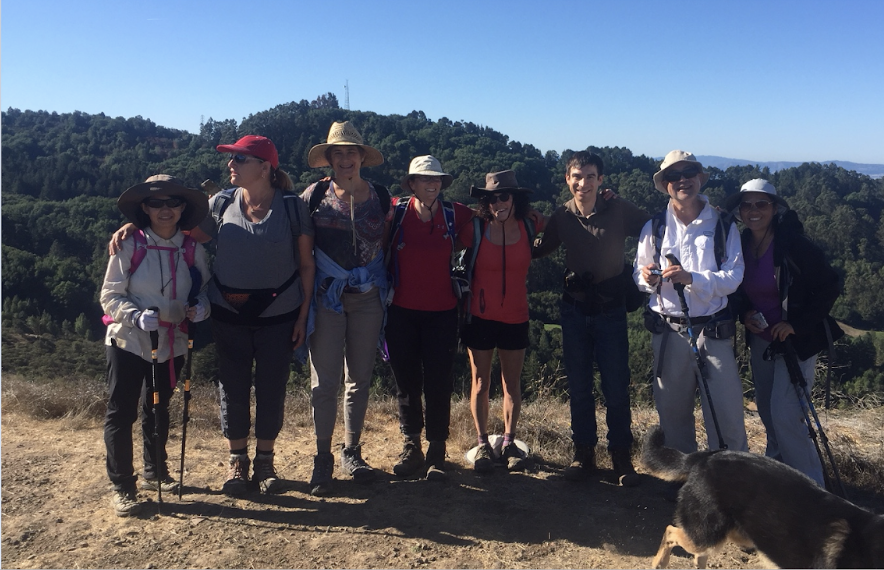
Executive Committee: Chair, Chuang; Vice-Chair, Heidi Lerner; Secretary, Michael Lusk; Treasurer, Fran Keeler; Outings, Robbie Chung Tilden Regional Park (Sept. 23,2017)
Leadership: BMHS currently has 20 certified leaders of whom 16 led at least one hike. Some leaders led frequently and others have led just a few. No matter how many hikes an individual has led, each one is unique and introduces our section members to the best of the San Francisco Bay. The most exciting news is that four new leaders became qualified to lead for the BMHS.
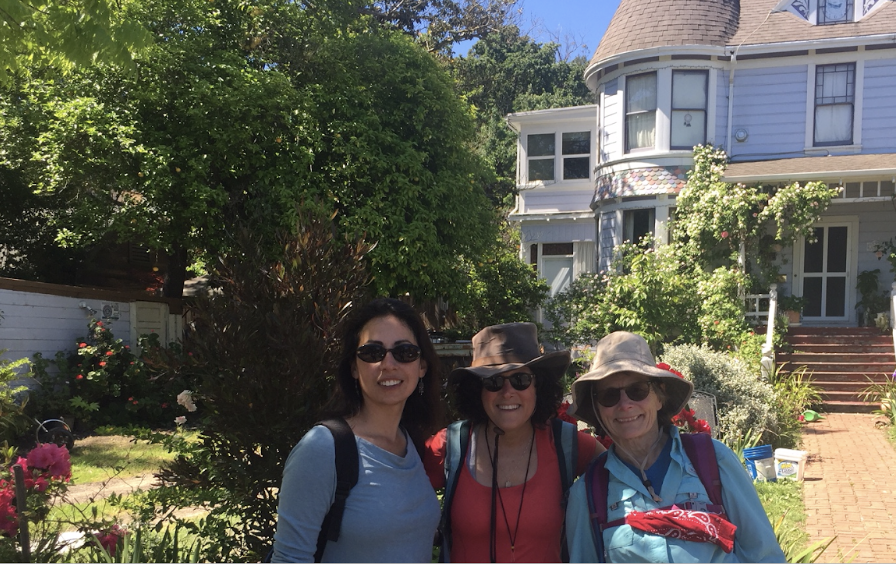
Membership: BMHS does not require its hikers to be paid-up members to be on our e-mail list. We currently have 330 subscribers to our BMHS e-mail list and 43 subscribers to the BMHS leaders’ e-mail list. The current membership of 51 includes the Executive Committee, hike leaders, 39 dues-paying and two honorary four-legged members.
Old Town, Martinez, CA (April 29, 2017)
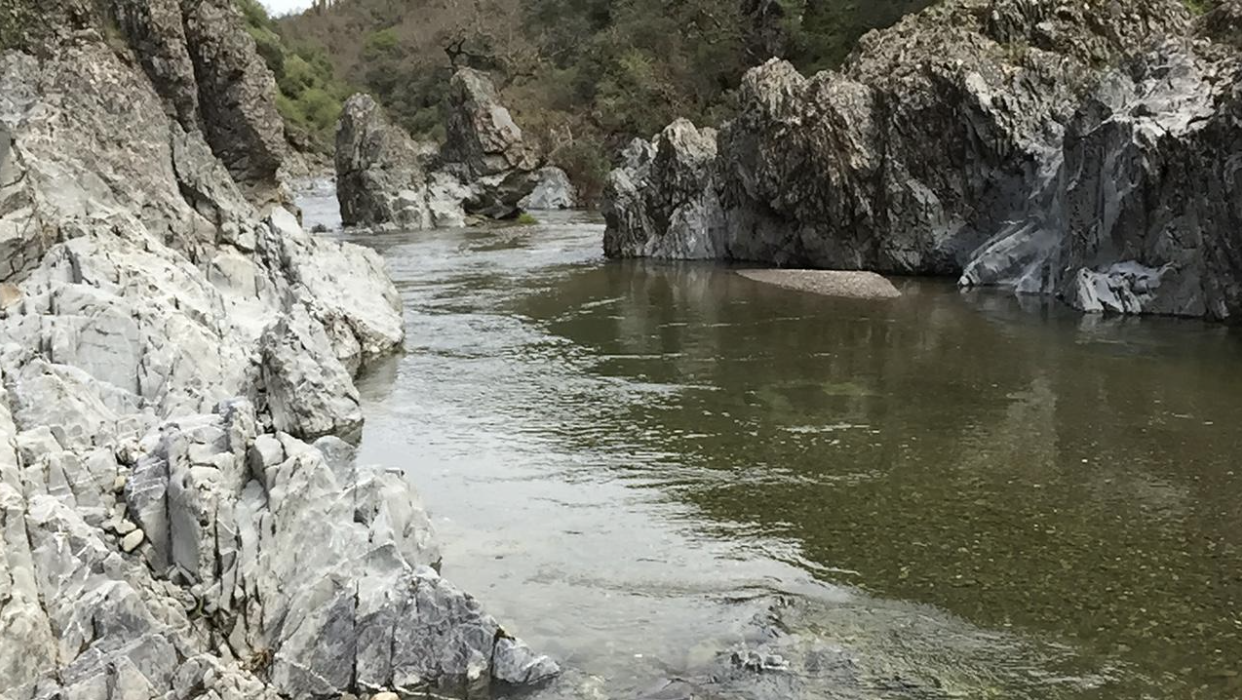
Coyote Creek in Henry Coe State Park (March 26, 2017)
Submitted by Heidi Lerner (BMHS hike leader and vice-chair, BMHS ex-com)
History: The Day Hiking Section has been in existence for over 35 five years and even now, has a roster of leaders who have an incredible store of knowledge on the local trails in all of the South Bay parks, including open space districts on the peninsula. The section went through a lull in membership in the early 2000 to 2014 timeframe and saw shrinking numbers of hikers, as well as an aging demographic. 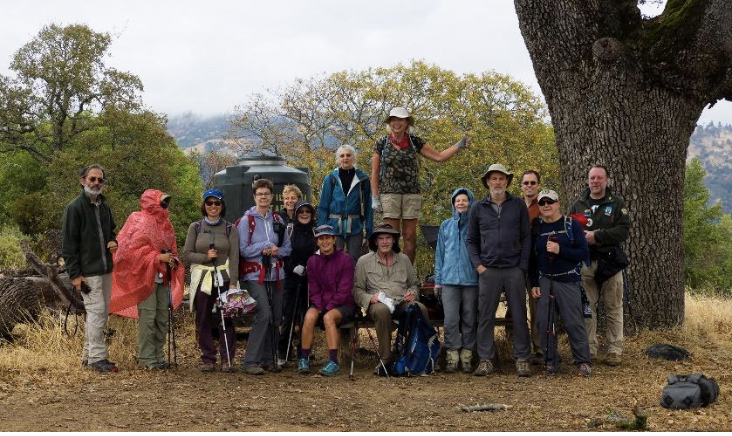
Group Participation: All of that changed when the leadership, led by Ron Karpel, Landa Robillard, and Rosemary Brisco among others started the Meetup site on 9 April 2015. The Meetup group now has almost 1000 members and has been very successful. The Meetup Fee is funded internally through donations.
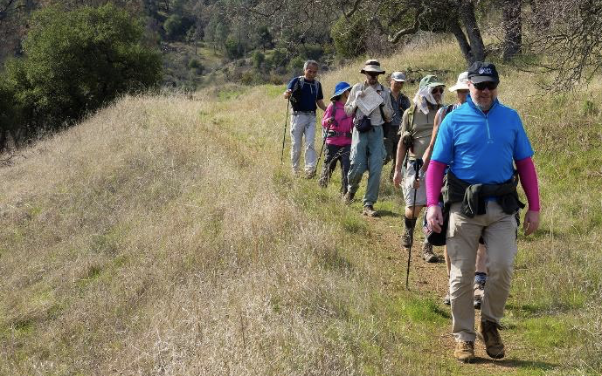
Leadership: There are currently 27 qualified leaders. All are current in OLT101 as well as first aid. Several leaders have Wilderness First Aid certifications as well. The leadership roster is maintained on Google docs as well as training records.
2017 Leadership: Chair: Ron Karpel Vice Chair: Dara Hazagi
2018 Leadership: Chair: Ron Karpel Vice Chair: Dara Hazagi
Trip Leaders: Cecil Anison, Lisa Barboza, Debbie Benham, Barry Brisco, Rosemary Brisco, Mike Castagna, David Fogel, Kathryn Hargrove, Ron Karpel, Bill Kirkpatrick, Joerg Lohse, Kelly Maas, Hailen Mak, Francoise Mertz, Ted Ratzek, Dot Reilly, Landa Robillard, Bonnie Reusch, Mei Shen, Stephen Uhler, Richard Vassar, Kee Yip, Piotr Zalicki,
Very often, there were two outings per weekend, with up to 15 people on each outing. There is typically a trip for people who don’t want to hike too far, and also one for longer distance hikers - the Meetup program has been very successful for this group! The demographics are trending younger, and there is quite a diverse mix of people in the group.
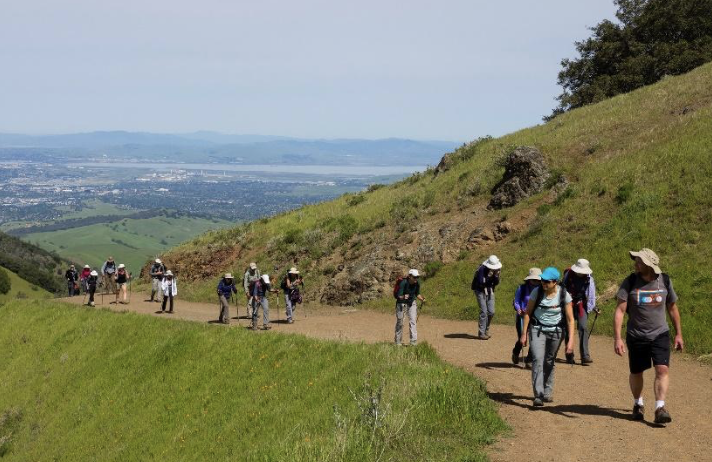 2017 Trips: There were over 125 trips sponsored by the group in 2017. Typically, two trips per weekend, and usually a mid-week hike as well. The trips ranged from hikes in Mt Tam and Mt Diablo, all over the peninsula, in the South Bay down to Henry Coe park, and in the East Bay as well. There are two very popular San Francisco City hikes annually – these hikes explore places in the city where people rarely go and are fascinating with history, culture, and architectural detail. There are also typically two or three snow-shoeing trips, sometimes overnight camping, in the High Sierra.
Conservation Topics: these are emphasized, very often the cataloging of non-native plants, although not eradication as that is usually an Open Space District responsibility.
Reported by Mike Jay, 2018 PCS Chair
History: The Peak Climbing Section has been in existence since 1966 – Founding members: Bill Rausch, George Barnes, Pauline Johnson, Clarence Alberg, Dick Lancaster, Mac MacDougall, and several others: From a 1968 Scree: “The section came into existence as a result of the efforts of many Sierra Club Members with varied talents, but a single goal – mountaineering trips geared specifically to peak climbs. The seeds were planted on a knap-sacking trip to Alta Peak in August 1966. Ideas discussed around a campfire at Pear Lake on Saturday evening were rehashed as w
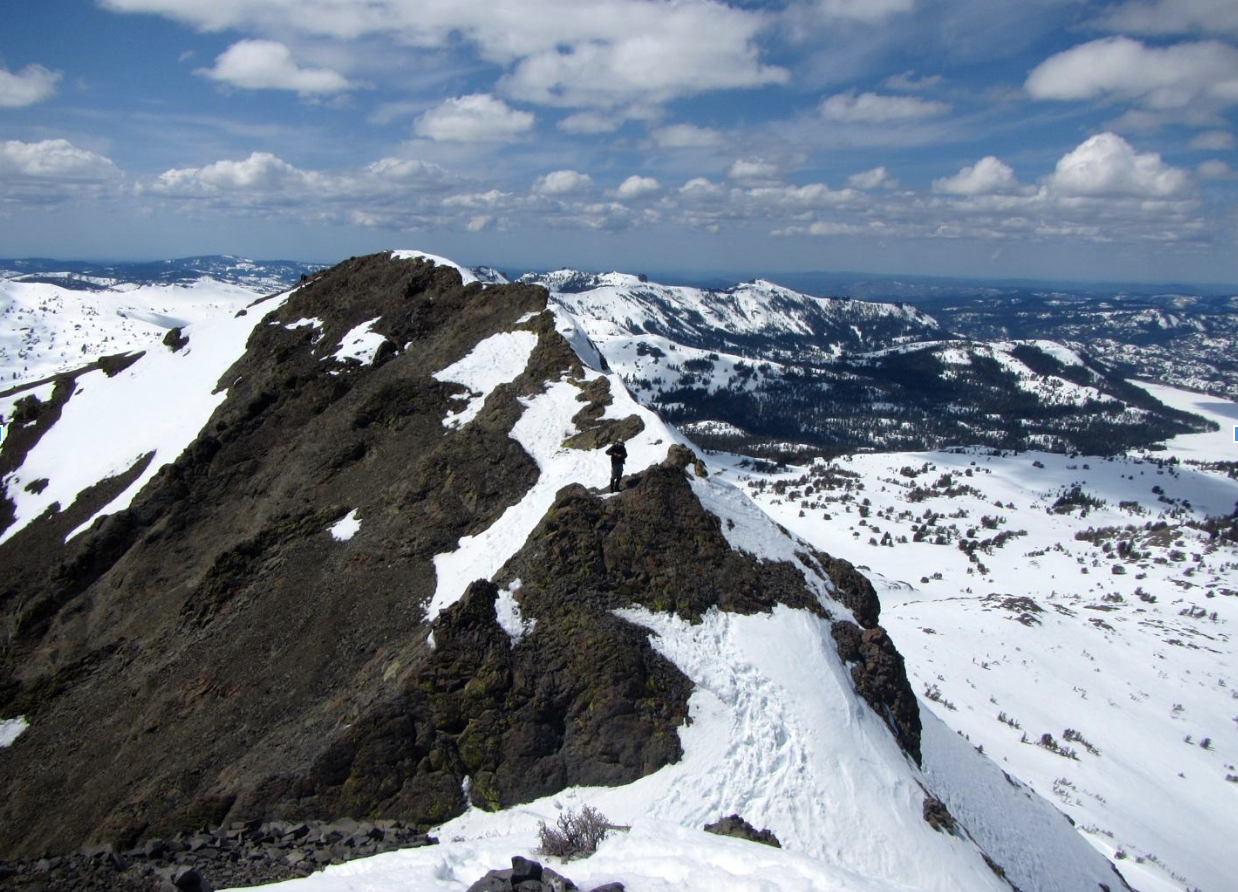
e climbed Alta and 4 or 5 lesser peaks on Sunday. Finally, out of the relaxed feeling after a good dinner at the Pine Cone came to the idea of inserting an article in the Loma Prietan asking for a response from those interested in forming a Peak Climbing Section…The response was sufficient to justify a meeting…centered around Class 3 climbing…officers, one an expert in mountaineering and another an enthusiast appeared at the next Board meeting…the board then approved unanimously the formation of our PCS...three geniuses drew up our by-laws (and any resemblance to RCS, SPS, or Knap-sacking Section bylaws is pure coincidence)…What is in the future? More training climbs, Desert Peaks, and with chartered plane space, trips to the Rockies, Alaska, and Mexico” (From an extract from Scree, vol. 2, no., April 1968, by Mr. Clarence Alberg. (Abbreviated to save space)
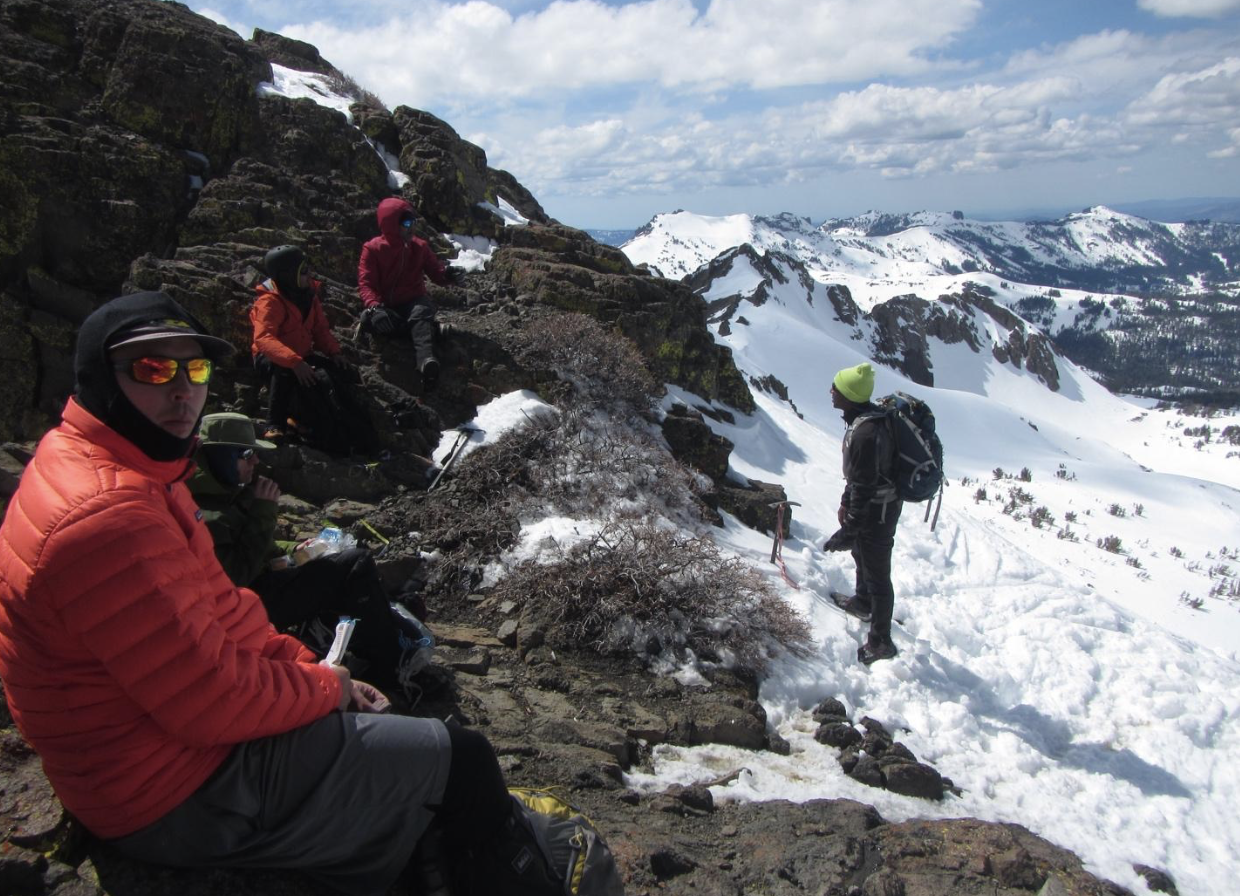
Group Participation: Has been up and down. There are over 301 members on Meetup, and over 300 on the mail-list server. Monthly Meetings are held on the 2nd Tuesday of each month and have interesting speakers, typical attendance is 10-20 climbers.
Leadership: There are 15 qualified leaders. All are current in OLT101, OLT201 as well as Wilderness First Aid certifications. A OLT201 class was presented by Lisa Barboza and Terry Cline to the Loma Prieta Sierra Club. They had over 15 students in the class.
2017 Leadership: Jeff Fisher, Chair, Arun Mahajan, Vice Chair, Terry Cline, Treasurer, Lisa Barboza, Mountaineering Chair
Trip Leaders: Aaron Schuman, Aurn Mahajan, Daryn Dodge, Jeff Fisher, John Novat, Kathy Rich, Kelly Maas, Lisa Barboza, Terry Cline, Tim Hult, Bo Meng
2017 Trips: There were over 20 mountaineering trips in 2017, in places as varied as the Trinity Alps, Wyoming, and the High Sierra. There were also about 5 private trips as well.
Social Media: Our website is www.peakclimbing.org, and has been in existence since 2009. Meetup was implemented in August 2015, and now has over 301 members. We’ve added 100 new “Meetup” members on our site last year. Meetup was used in conjunction with Facebook. In addition, there is an email server list which can also be used by anyone in the section to communicate.
Conservation Topics: Our climbs continue to follow the Mission Statement “explorer, enjoy and protect the wild places of the earth;…)
This year 15 to 25 volunteer leaders, qualified in classes of leadership and first aid, met semi-annually to propose, tweak, and approve 6 months of hikes for people of all ages who meet minimal hiking requirements. The half-year hike schedule further evolves at the leaders’ potluck dinner, where they agree on and sign up to lead several of ~95 possible hikes. The potluck traditionally includes speakers on topics relating to hikes, ranger duties, travelogs and pertinent subjects.
Leaders generate and scout excursions over a wide area: Marin County’s Mt Tamalpais, Headlands, and Tiburon; city walks in San Francisco, San Jose, Redwood City, Foster City; any bay area county and state parks, especially those in Santa Clara and San Mateo, occasionally as far south as Pogonip and Forest of Nisene Marks in Santa Cruz County; National Parks such as GGNRA, Presidio, Tennessee Valley, Land's End; city parks such as Golden Gate, John McLaren, and Palo Alto Foothills Parks; and in most of the far-flung Open Space Preserves.
We hike twice a week, Wednesdays and Thursdays, occasionally Saturday, lasting from late morning to early afternoon, occasionally with a potluck. Hike difficulty ranges from leisurely 1A to challenging “double-star hikes” over 8 miles and up to 13 miles, for example, from the beach to Berry Creek Falls in Big Basin. Favorites still include Big Basin, Purisima Redwoods, Fitzgerald Reserve on the coast.
Our excursions typically attract 10 to 25 people, all hikers welcome, and the group personality nurtures friendly hikers of varied life experience, often widely traveled, who freely share adventures. Hikers can join our email list of ~230 hikers to receive weekly updates on specific hikes, and be listed in our directory of ~270.
Join us!
San Mateo Hiking Section Calendar
Who We Are
Singleaires is a community of 250+ active adults who embrace the Sierra Club motto (explore, enjoy, and protect the planet) through a variety of events and outings. Originally just a singles group (as the name implies), we welcome those who have found a life partner, too. Our members are typically 50+ years old, many of us retired, but adults of all ages are welcome to join us.
What We Do
Every week we have 2-3 Sunday hikes, followed by a potluck. This is our core program. A typical mini hike (a few miles with minimal climbing) would be walking along the SF Bay, exploring Ardenwood Historic Park, or taking a stroll at Stevens Creek Reservoir. A 1A hike (less than 6 miles) could be climbing St. Joseph’s Hill, enjoying the wildflowers and canines at Pulgas Ridge, or even combining a visit to the Rosie the Riveter Museum with a nearby walk. For those who want more of a challenge, we have 2B and 3C hikes at the Pinnacles, Mission Peak, Big Basin, Tennessee Valley, or any of the other glorious parks in the SF Bay Area.

Potlucks are a highlight of the week for those who want a break from their evening routine. Some folks pick up their contribution at the local deli while others whip up a gastronomic delight in their own kitchen. Either way, we gather in the home of a gracious member somewhere between San Jose and Redwood City to enjoy a smorgasbord while catching up on each other’s latest news.
In addition, our members organized a variety of other activities this year. Larry hosted a fun backyard concert, and Dennis invited Singleaires to see him perform in Gilbert and Sullivan’s Princess Ida. The annual summer picnic was a relaxing afternoon at Stevens Creek Park. Armchair travelers enjoyed accounts of trips to such places as New Zealand and Italy at Rita B.’s monthly travel program. Others satisfied their wanderlust by joining an assortment of overnight trips. Snow bunnies had a chance to frolic in the white stuff for several days in February at Echo Summit. In the spring Larry and Rita H. organized a 3-day trip to Pt. Reyes, spending nights at the hostel, and Ed led his annual backpack trip to Sunol. Thanks to Steve and Warren for organizing the always popular Sierra Adventures (car camping near Silver Lake) plus 2 mule pack trips, one to Hilton Lakes and another to Piute Pass.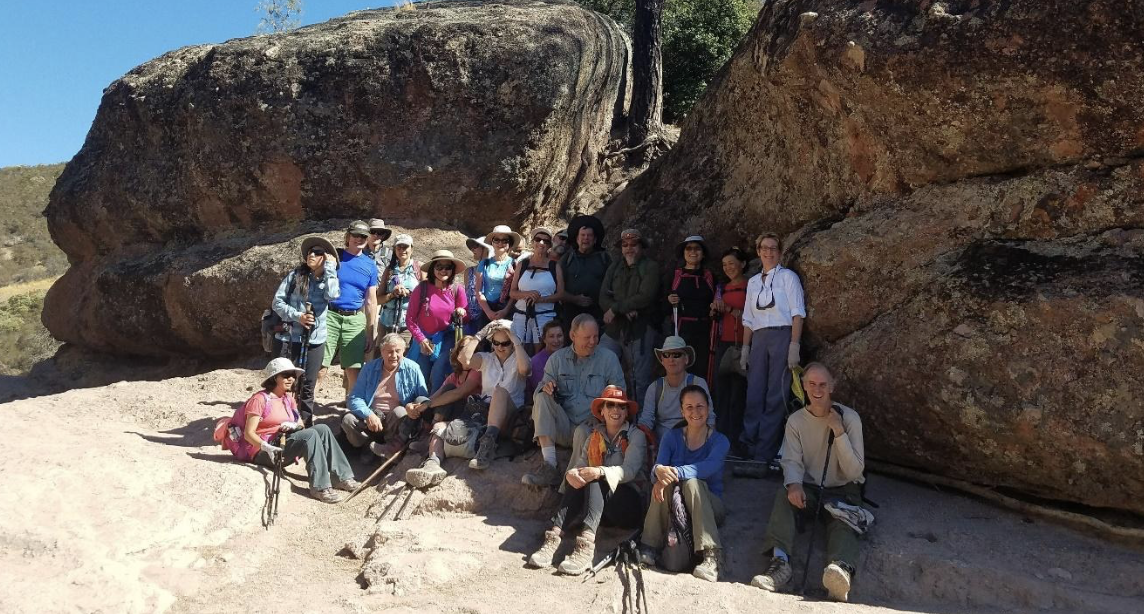
Behind the Scenes
Our group is blessed with strong leadership, partly from the ExCom and partly from all the hike leaders and potluck hosts. Besides seeing that we have a full schedule of activities, they stay informed about longtime members who develop medical problems, informing us all through our Yahoo group of the situation and any short-term needs. For those who pass on, Judy O. leads an annual hike to Big Basin Park, where we dedicate a tree to each of these members in our memorial grove there.
Keeping in Touch
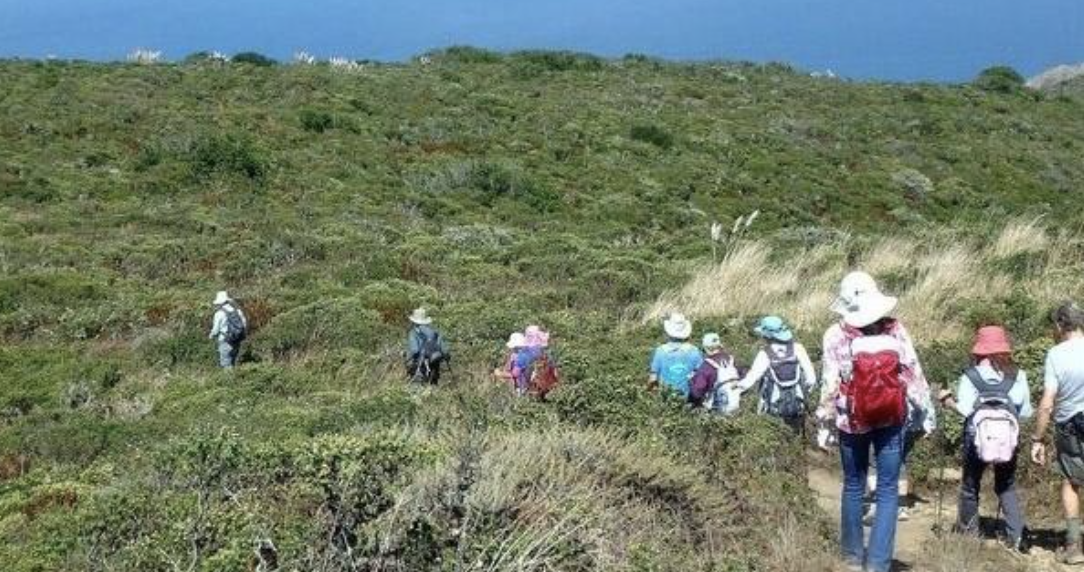 Obviously, all these activities require a lot of communicating, both for organizing events and for sharing them with potential participants. The public has full access to our weekly hiking schedule on the Chapter’s online calendar and on MeetUp (the latter an especially good means for those who have not yet joined the Sierra Club). Anyone who would like to get information about all of our other activities needs to become a Singleaires member by filling out our form and paying $20/year. Then they will receive our quarterly Activities Schedule, which lists all the activities previously mentioned. In addition, members may sign up for our Yahoo Group. This is a valuable tool to share changes to our events (such as cancellation due to rain) or information about new opportunities.
Loma Prieta Gay and Lesbian Sierrans
Reported by Mike Zampiceni, GovCom Chair
Following a year of celebrating our 25th anniversary as an activities section of the Loma Prieta Chapter in 2016, we continued in our 26th year offering 40 hikes and our two general membership meetings, consisting of our August summer picnic and December holiday party. The following link opens a comprehensive slideshow (by Sharon Lum) that highlights our events in 2017 as well as several archival photographs.
GLS currently has nine outings leaders, who skillfully and responsibly host our events. In 2017, we had a small GovCom (Governing Committee) of three elected officers, who were supported by three volunteers. Our group has about 60 "members," who subscribe to our newsletter, The Wild Side, and another 200 supporters who have signed up for our free online Forum. In 2018, GLS plans to offer Meetup outings to increase our exposure and gain potential members, which will be fashioned similarly to GLS Bay Chapter group organizes their Meetups. as well as other groups in the Sierra Club that have had success with Meetups.
While many GLS members are active with personal causes, as a group our main focus has been on promoting conservation through our day hikes and campouts. We were proud to be A $500 sponsor of the chapter's Guardians of Nature program in 2017.
Loma Prieta Sierra Singles (LPSS)
Loma Prieta Sierra Singles (LPSS) is a group of more than 800 adults who enjoy a wide range of outdoor and social activities. Currently, the typical participant is age 50 plus.
Events and outings. LPSS offers a variety of events throughout the year. Nature hikes are generally five to ten miles in length, and take place in our many scenic open spaces in the Bay Area. We have regular Wednesday hikes year-round after work hours, lead by Denise Vann, which are in our parks in the longer summer months, and around Palo Alto and Stanford during the shorter winter months. Welcome New Members hikes are hosted generally on the baylands and are four to five miles in length. The bayland trails are flat and wide, and thus it is easy to engage in conversation while on the trail.
In addition to popular outdoor hiking and backpacking activities, LPSS offers a wide range of other activities throughout the year. The annual LPSS Halloween Party, which features live dancing music and a costume contest, is always well attended. During the winter holidays, LPSS leaders have led Thanksgiving, Christmas Eve and Christmas Day hikes as well as potlucks in private homes and at outdoor venues such at Half Moon Bay State Beach and Huddart Park.
Some of our more unusual events have included archery and ice skating. We frequently have potlucks, live music nights, game nights, movie, live theater, and dinner outings.
Demographics. There are currently 779 members in LPSS with approximately 12 active social and hike leaders that plan and offer activities regularly. In 2017 there were 108 hikes and 13 social events offered and 25 new members joined LPSS. LPSS is financially sound, which means that there are funds available to support creative ideas for activities.
Challenges and Opportunities. LPSS is in need of more leaders for both social events, which is a very simple process, and hiking/backpacking, which is slightly more complicated but reasonable and doable. Leadership is particularly needed for the 20s, 30s and 40s age groups. LPSS also has openings on its Executive Committee (ExCom). ExCom meetings are where plans for new activities are shaped with member input and strategies for the future of LPSS are discussed. Finally, there are a number of administrative tasks being handled by too few volunteers, including creating and maintaining social media pages. For information about any of these opportunities contact Sandra Winkler, slwinker19@gmail.com or Barbara Muir, barbara_muir@yahoo.com
Loma Prieta Ski Touring Section (STS)
Reported by John Cordes
STS provides leadership and organization for its members and the general public to travel, explore and enjoy the natural winter environment by offering beginner-to-advanced ski-touring trips. STS outing leaders are all volunteers, passionate about spending time in the winter wilderness and promoting nature, particularly when experienced on cross-country skis. Our trip leaders organize trip logistics and share our enthusiasm, knowledge of cross-country skiing, and sometime our culinary expertise with trip participants on trips varying in length from day trips to weeklong snow camping endeavors.
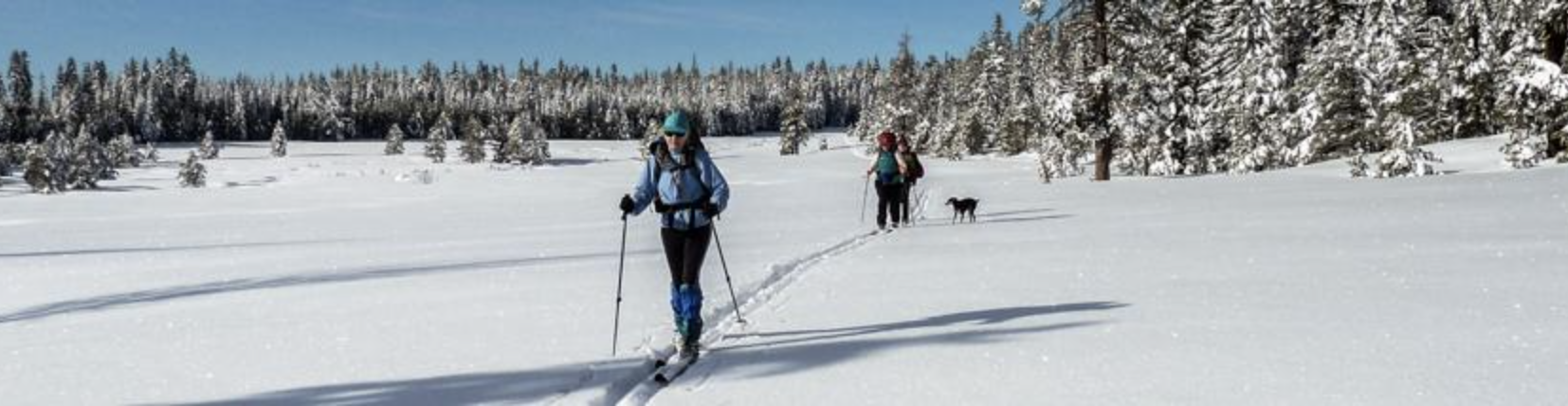
The Ski Touring Section also enlist public interest and cooperation in protecting winter environments, raising awareness for safe winter travel, and preserving ski touring as winter recreation on public lands. We regularly have overnight or two-night ski trips to the Sierra Club’s Backcountry huts scattered around Lake Tahoe. In the summer, we encourage our members and the public to help maintain the huts and prepare them for an upcoming winter season.
Our season typically runs from November through May. Trips are rated according to difficulty, from beginner trips for the first-time cross-country skier to advanced trips for the adventurous and hardy skier who can ski 10-30 miles a day, climb high mountains using skins and descend using Telemark turns. Overnight trips may lodge in backcountry huts, snow camp, or stay in other private or commercial lodging.
In 2017, STS leaders led six outings to five unique destinations. Most trips visited the Tahoe area and made use of the Clair Tappaan backcountry ski huts. In total, we had 73 people participate in the 6 trips.
You can find out more about us on our website. We list our trips on the chapter calendar. We usually hold three meeting per season, which are open to the public. These are our kickoff meeting in Dec, and update in Jan and an end-of-the-season potluck/slideshow in May
Highlights from previous STS trips:
Dave Erskine on the trip to Lassen Volcanic, 1/9-10/2016: “Some pioneers had broken trail ahead of us so the going was easy. Had to watch out for the snow bombs coming off the trees though. From the top of the ridge we worked our way up and down the east side back to the Sulfur Works. Again, great powder skiing.”
Dick Simpson on the outing to Peter Grubb Hut, 1/30-31/2016 which encountered some icy conditions: “the group was ready for the challenges and appreciated the opportunities provided. …the fourteen participants [got] along famously.” On this trip, dinner reportedly included salsa, guacamole and chips for appetizers, and a salad and chili for dinner.
The San Carlos/Belmont Regional Group
The San Carlos/Belmont Regional Group (SCB) was formed in 1972 to serve Sierra Club members living in the small communities of San Carlos and Belmont in San Mateo County. The group also serves anyone in the area who wishes to participate whether they are members or not.
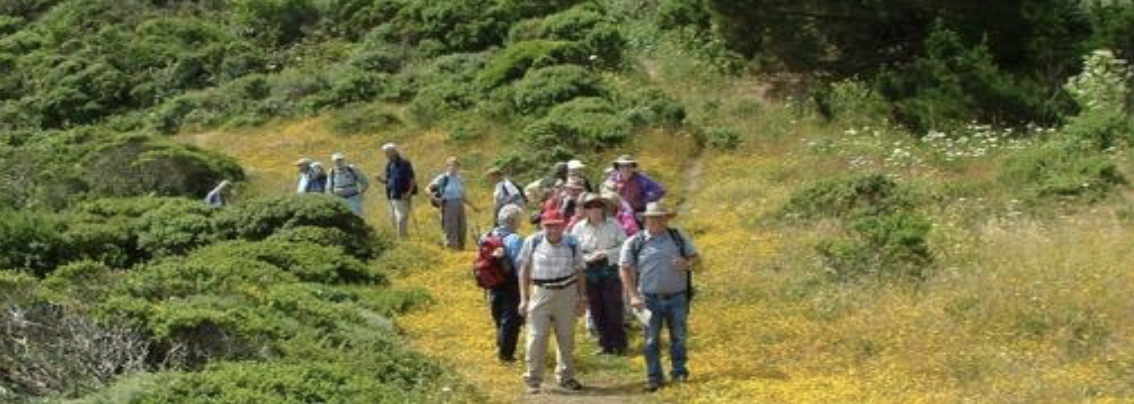
SCB meets on the second Saturday of every month except July and August. A hike is scheduled in the morning at a location on the Peninsula. Hikes alternate between easy for families and seniors and more vigorous for experienced hikers. They are less than 5 miles and usually less than 1000 feet change in elevation.
SCB also features Day Outings, which include a family-friendly hike followed by lunch at a local restaurant. No evening program is held.
SCB holds their monthly dinner programs in the homes of their members the same day as the hike. Being able to meet in homes is unique among the regional groups in the Chapter. Everyone brings an item to the table. The program usually includes a speaker on wildlife or conservation. Community issues are also on the agenda. 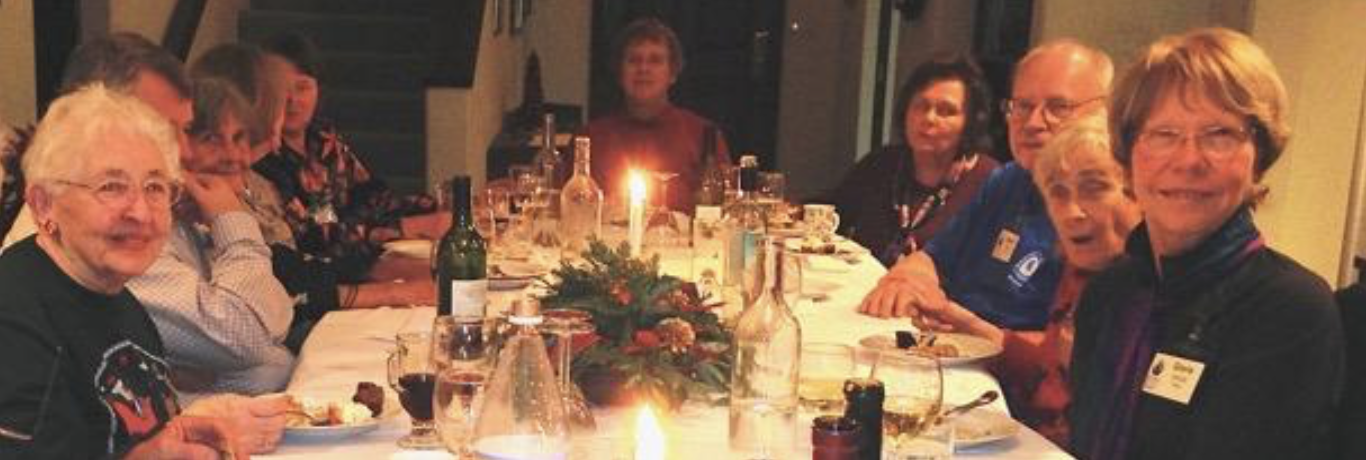
Gladwyn d'Souza is the long-time SCB chair and does City Watch for Belmont. Other SCB officers include Paul Wendt, Vice- Chair and Bike Committee; Marilyn Brewer, Rep to Chapter ExCom; Camille King, Pol Com Rep, and SCB Events: Bonnie McClure, City Watch for San Carlos; Pam Miller, Hiking; and Lee Baker, Webmaster.
Gladwyn, as chair of the San Carlos/Belmont Group, has proposed chapter-level conservation priorities for 2018. These issues can be viewed here.
Contact: MarilynBrewer@comcast.net
Hikes in 2017
The easy and family-friendly hikes:
Docent tour of "Trees of Stanford" at Stanford campus
Sawyer Camp Segment of the Crystal Springs TrailWaterdog Lake Trail, Belmont
The moderate hikes:
Pulgas Ridge Open Space Preserve in Redwood City near 280 Freeway.Sweeney Ridge near Pacifica
Big Canyon and Eaton Park trails in San Carlos
Day Outings:
Half Moon Bay – coast trail to south (rated Easy – Family Friendly) and lunch at a Pillar Point
Tour of UC Botanical Garden, Berkeley, and lunch in town (Easy)
Evening Dinner Programs:
"Traveling with Sierra Club" presented by Gary Bailey of the Loma Prieta Chapter Travel Program
“The Loma Prieta Chapter Water Committee” presentation by Katja Irvin, chair
"Stopping Clear Cutting in the Sierras" presentation by Karen Maki, chair of Forest Protection Committee
"The 2017 Solar Eclipse" presentation by Gladwyn d'Souza
"Self-Driving Cars" presentation by Gladwyn d'Souza
Annual Christmas Party
SCB Conservation Efforts
San Carlos City Watch: Bonnie McClure is our chief advocate for Sierra Club concerns when decisions are being made by City Council, the Planning Commission, and other commissions. SCB continues to work to find ways to achieve more low-cost housing that can reduce long carbon-producing commutes for workers at all levels.
Belmont City Watch: Gladwyn d'Souza is our advocate for Belmont as a citizen. He too continually works with the commissions and City Council to get more low-cost housing built. He is also providing input to the city's major efforts: an update of the General Plan, a new Specific Plan for the downtown known as Belmont Village at Ralston and El Camino Real, and an Environmental Impact Report for its Climate Action Plan.