 General Guidelines and Reminders for Leaders
Sign-in Sheet/Liability Waiver - All participants on Sierra Club outings are required to sign a liability waiver. Let your participants know before they join your outing. You should include this fact in your advertisement (write-up) and point to where they can read a copy of the Angeles Chapter sign-in sheet/waiver prior to the outing. The Individual Waiver aka the Participant Agreement can be used when sign-in sheets are not to be used. Please use the most current forms, which are available on the Forms page.
Forms - Forms for outings include waivers, both individual and group “sign-in sheets,” minor release forms, safety management plans, individual medical forms, provisional evaluations, emergency response - patient forms, incident reports, and more. For more information on when Medical Forms and Safety Management Plans (SMPs) are required, See our own Decision Tree, the 2026 Addendum to the Leader's Reference Book, and Chapter 3 of the Leader's Reference Book. The forms are easily accessed on the LTC website on the Forms page.
Safety Management Plan - Leaders must prepare a Safety Management Plan (SMP) for all overnight trips and for all one-day trips where either 911 service is not available or advanced medical services (Professional, state-regulated emergency medical services or professional SAR care) could not attend an injured person within 1 to 2 hours, assuming the injured cannot move on their own, and location is furthest point on the hike away from the trailhead. The SMP presents a structured summary of resources that may be used during an emergency response. An SMP is required for all Provisionals. SMPs are recommended for ALL outings and for the huts and lodges that the Chapter maintains. The SMP is available on the Forms page.
Individual Medical Form - Participants must complete a Medical Form prior to all overnight trips and prior to all one-day “backcountry” trips where either 911 service is not available or advanced medical services could not attend an injured person within 1 to 2 hours. The individual medical form presents a summary of medical information that may be used during an emergency response. This form and the Medical Form Guide are available on the Forms page. An online version that works within Campfire Events is available for ICO trips and overnights (as of June 2022).
Outings Health Procedures - Public health policies will continue to evolve. Review Outings Communicable Disease/Health Policy ahead of your trip. As of May 2026, it replaces the COVID 19 Policy and will be periodically reviewed and updated. The Health Policy includes information about protocols and forms. Be aware that: indoor spaces and events will have some different requirements. Federal Lands and State mandates will have precedence over Sierra Club outings rules.
Participation by Minors on non-ICO outings - Sierra Club now has an updated Non-ICO (Inspiring Connections Outdoors) Minors Safety Policy. The policy sets the standards for Outings, activities, events that include accompanied (parent / legal guardian is present) and unaccompanied minors (Non-ICO but no parent / legal guardian present). The new requirements outlined by the policies strengthen Sierra Club's commitment to creating a safe and inclusive space for all participants, aligning the organization with current regulations and best practices. Please see the Non-ICO Minors Safety Policy with pertinent Non-ICO Minors Policy FAQs.
Inclusivity and Equity in the Outdoors. This area of our site is under development. Meanwhile, check out this blog post Building Community Through Group Hiking. Some of these ideas - and more - will resonate as we continue to grow the Angeles Chapter outdoors program. Get in touch with us if you have thoughts on this topic. For Sierra Club's Equity vision and materials, go to the Sierra Club Community Equity pages. Please refer to the Rules of Conduct page for the Safe Space Agreement for summary of commitments to Inclusion and Equity into Outings.
Understanding Implicit Bias. Implicit - or unconscious - bias is the process of associating stereotypes or attitudes towards categories of people without conscious awareness. Implicit bias operates outside of the person's awareness and can be in direct contradiction to a person's espoused beliefs and values. Implicit bias automatically seeps into a person's affect or behavior and is outside of the full awareness of that person. These unconscious biases can play out in our decision-making regarding how we select participants and conduct our outings. See additional discussion of Implicit Bias in Chapters 3 and 4 of the August 2022 Leader's Reference Book. Through better understanding and awareness of implicit bias, leaders are more empowered to offer equitable and inclusive outings under a safe space agreement.
Safe Space Agreement - Sierra Club Outings insists on a safe space agreement between participants, volunteers, leaders, and staff. We want to support everyone in exploring, enjoying, and protecting these phenomenal spaces, and hateful and dangerous behavior will not be tolerated. We don't want to deny participation in these outdoor programs and we will always say no to racism, sexism, ageism, homophobia, impairment, and disruption. Familiarity with and adherence to these updated policies (Affirmative Standards of Conduct 2025, Rules of Conduct, and Equal Opportunity Policy 2.0) will allow leaders to lead equitable and inclusive outings under this Safe Space Agreement.
Rules of Conduct - Our Rules of Conduct for Outings apply to all persons participating in Angeles Chapter Sierra Club activities. Conduct must at all times be acceptable to the group itself, to the general public, and to officials with whom the group may come in contact. See Rules of Conduct. (These rules are soon to be updated.)
Ratings and Participants - The Angeles Chapter rating (O, I, M or E) does not relate to outing strenuousness, but does indicate the type of outing and terrain. Outings leaders assess the qualifications of participants and ideally, they will connect with participants before the outing to supply more details about the outing, if necessary. For most non-restricted outings, participants do not need to be Sierra Club members.
Remember that Conservation Component - Outings are always a great way to talk about the environment where we travel, whether a local park, beach or desert or mountains. A few ways to do this: check our Environmental Awareness page, which is especially useful for those on a leader track. Look at the Sierra Club's campaigns as well as the Chapter Conservation page. You could tie your hike or trip to a Places We've Saved locale such as Mojave Preserve or the San Gabriel Mountains National Monument. Find ways to tell a story in your write-up and on a hiking break. Remember that we always practice Leave No Trace (LNT) principles.
Ride Sharing - We encourage outings participants to make their own ridesharing arrangements, but we cannot take an active role in making these arrangements. See Ridesharing page for rideshare points.
Transportation - The Transportation and Rideshare page includes bus policies and a link to watercraft policies related to outings. Note that CARPOOLING is never organized by the leader.
Mountaineering Restrictions - Outings requiring the use of ice axes or rope/climbing gear may be conducted under very restrictive circumstances, including approval at the National Sierra Club level. Such trips require special screening of participants, leader qualifications, trip plan approval and Sierra Club membership for all participants. Groups, Sections or Committees must be certified, after special application to and approval by the National Mountaineering Oversight Committee (MOC), in order to conduct such outings.
Service Animals and dogs on outings - Sierra Club complies with American Disability Act (ADA) guidance. Service animals are welcome on Sierra Club trips and activities if they meet the following criteria:
- Participants seeking to include service animals must make a request in advance of the activity/event.
- Other participants need to be aware of the presence of service animals before the start of any activity.
- *Service animals must be trained service animals.
- *Service animals must be associated with a valid disability.
- *Service animals will comply with ADA Title II and III. Emotional support animals, comfort animals, and therapy dogs are not service animals under Title II and Title III of the ADA.
- Service animals must be licensed and registered, per local license and registration requirements
- Service animal participation cannot create an undue burden on group management, safety, logistics, or trip experiences, as determined by the organizer/leader.
Service animals with or without vests are allowed on any public land even if posted signs say "no dogs". Be aware of the rules, including the limited questions you can ask, and avoid denying someone the ability to join your outing. Here is an ADA FAQ on service animals. Chapter entities should take care to ensure that leaders as well as potential participants are aware of the rules. Remember, all food, leashes, bedding and other accessories will be the responsibility of the Handler to manage. For the area you plan on passing through, please identify who has jurisdiction for that area, and what relevant permits, rules and regulations apply for each jurisdiction. Service animal use is restricted to permits, land agency regulations, private land permits, and any regulatory guidelines where activities are taking place or passing through. Also, the presence of service animals cannot create safety issues for other participants. All service animal excrement will be carried out or disposed of according to Leave No Trace practices. If all criteria are satisfied, leaders/organizers must accept service animals with reasonable accommodation to participant needs. Emotional support animals, comfort animals, and therapy dogs are welcome on Sierra Club trips and activities if they meet the same criteria as above, with the exception of the three qualifiers with asterisks (*).
TIPS for Trip Planning
- Tip #1: Research the trip area not just for regulations or route, but also consider the environmental appropriateness of your plan.
- Tip #2: Check our Trailhead Talk page. Whatever you call it - Welcome talk, Launch Talk, Pre-Trip Briefing - we all want to be sure to set the right tone and ensure a safe and enjoyable hike, walk, or gathering.
- Tip #3: Want to know about nearby conservation and action campaigns? Check Addup
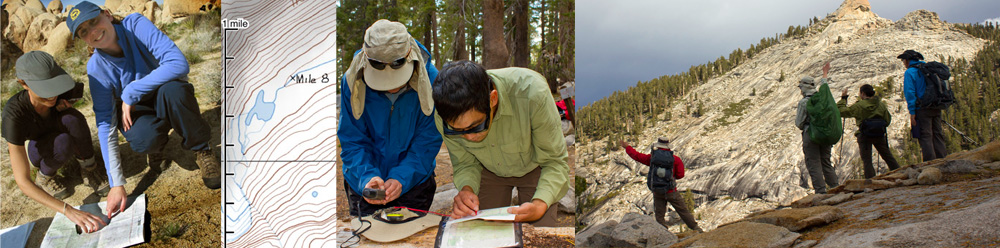
Stay Found - As a leader, whether you are an O or above, you'll want to ensure the safe return of your group back to the trailhead. Consider attending a Navigation event. Knowing which trail or route to take is just as important as keeping your group together and happy.
COMING SOON!
How to create an effective write-up & netiquette
How to promote your outings
TIPS on provisionals for evaluators
Theory of Change for Outings.
See more trip planning pages: Rules of Conduct, Essentials, Fundraising Outings and Parks & Permits, Ridesharing and more.